
On busy days, you reach for gut-friendly breakfasts like oats or chia with yogurt and berries, plus a smoothie with kefir and flax to steady blood sugar. You pack small portions of almonds or hummus with carrot sticks for steady fuel and sip warm, low-caffeine drinks to soothe your stomach. It’s a simple rhythm that keeps things calm and predictable, yet there’s more to optimize as schedules tighten and meals shift.
Key Points
- Start with gut-friendly breakfasts like oats or chia-poppy blends with yogurt and berries to balance fiber and natural sweetness.
- Pack portable fiber-rich snacks (almonds, seeds, hummus with veggies) in modest portions for steady digestion on the go.
- Hydrate with warm, low-caffeine drinks and include yogurt when tolerated to support motility and satiety.
- Create a practical daily rhythm; if breakfast is missed, use a yogurt-fruit bridge and small midmorning snack.
- Focus on core patterns: consistent breakfasts and snacks that minimize bloating and inflammation while staying practical.
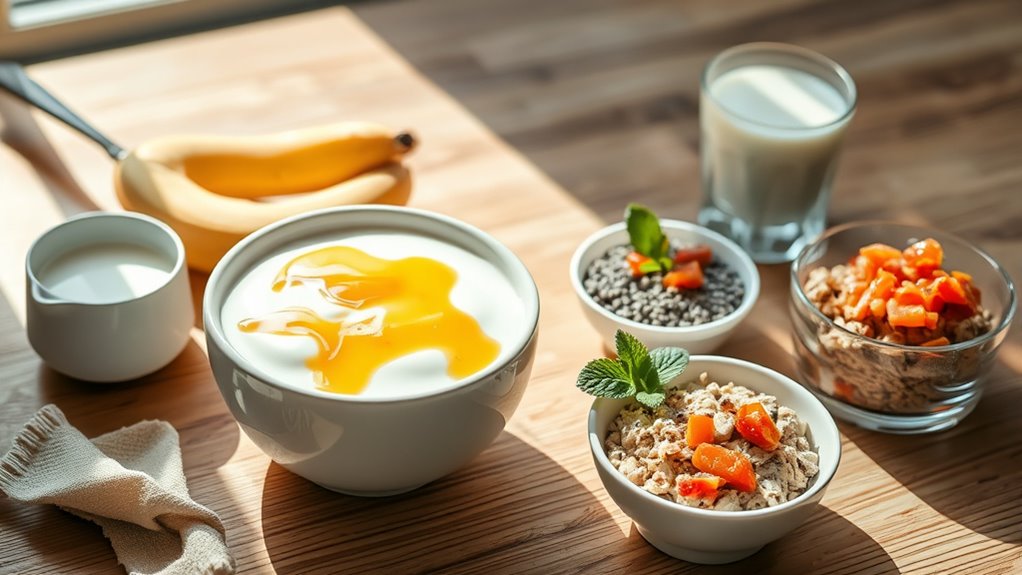
On busy days, what you eat matters more than you might think, because the right foods can keep your gut calm and your energy steady. You’ll notice that small, steady inputs beat big, erratic meals in maintaining comfort and focus. The trick is to choose foods that minimize bloating, support digestion, and modulate inflammation without slowing you down. You don’t need grand recipes; you need reliable patterns you can repeat.
First, you’ll want gut friendly breakfasts that set the tone for the day. Think fiber with gentle timing: oats or a chia-poppy blend paired with yogurt, berries, or sliced banana. The goal is a balance of soluble fiber and natural sweetness that won’t spike your blood sugar. If mornings feel rushed, a quick smoothie can work, provided you add a scoop of yogurt or kefir for probiotics and a spoonful of oats or flax for bulk. The idea is to feed your gut with prebiotic fiber while keeping portions modest enough to avoid immediate heaviness.
Next, you’ll structure portable options you can grab on the go. Portable fiber rich snacks are your ally on back-to-back calls or transit. Small containers of almonds, pumpkin seeds, or walnuts provide sustainable fats and magnesium that support muscle function and calm nerve activity. Pair with a piece of fruit for natural sweetness and additional fiber, or carry a compact container of hummus with carrot sticks for a savory option. The key is to keep portions modest and divvy them into frequent, small bites rather than large infusions of calories.
You’ll also notice that hydration matters, especially when you’re swallowing pills, sipping coffee, or rushing between tasks. Water helps your gut maintain motility and dilutes acids that can irritate sensitive tissue. A warm beverage that isn’t highly caffeinated can soothe the stomach while you navigate meetings. If you tolerate dairy, yogurt can count as both a snack and a micro-meal, delivering both lactic bacteria and protein that support satiety.
In practice, you’ll plan around a rhythm rather than a rigid menu. If you miss a standard breakfast, a quick yogurt-and-fruit cup can bridge the gap without triggering cramping. When a midmorning lull hits, reach for a small handful of seeds and a clementine. For lunch, aim for lean protein, fiber, and vegetables, but keep portions reasonable to prevent post-meal heaviness. You’ll benefit from noting what triggers discomfort or gas and swapping that item for a gentler alternative. The approach is practical, not punitive: you’re building a reliable system that stabilizes digestion on busy days, with gut friendly breakfasts and portable fiber rich snacks acting as the core levers of comfort.
Common Questions
What Triggers Gut Discomfort on Busy Days for You?
You’re asking what triggers gut discomfort on busy days for you. Most often, breakfast routines and stress triggers set things off: rushed meals, skipping steps, tight schedules, and anticipatory anxiety. You’ll notice that late snacks or heavy, fatty fares worsen it, too. By slowing breakfast, prioritizing fiber-balanced options, and labeling stressors, you gain clarity. Stay curious, track patterns, adjust portions, and practice breathing to reduce fight-or-flight responses during morning rushes.
How Quickly Do These Foods Show Benefits?
You’ll often notice relief within 30 minutes to a few hours after you eat, depending on the food and your gut. Quick timing comes from simple, soothing choices, while food instincts guide you toward what calms you fastest. You’ll likely feel less bloating, steadier digestion, and reduced cramping as your gut responds. Track how each meal lands, note any patterns, and adjust. You’ll build confidence, refining quick timing with practical, evidence-based tweaks.
Any Dairy-Free Gut-Calming Options You Recommend?
Only if you’re avoiding dairy, try dairy free options like coconut yogurt with berries, almond milk smoothies, and hemp seed puddings. About 70% of people report feeling calmer gut-wise after routine yogurt avoidance and dairy substitutes; you might notice similar relief with dairy free options. For gut calming snacks, grab banana with almond butter, cucumber slices, or a small handful of soaked almonds. Stay curious, track triggers, and adjust portions to keep cravings satisfied and digestion steady.
Do Supplements Replace Whole Foods for Gut Calm?
No—supplements don’t fully replace whole foods. If you’re aiming for gut calm, you’ll want a mix: use supplements for gaps, but rely on whole foods for fiber, phytonutrients, and steady nourishment. Think in terms of supplement vs wholefoods across your day, not a single fix. Prioritize gut calm strategies like diverse fibers, fermented foods, and hydration, then fill gaps with targeted nutrients. Your best routine blends both, thoughtfully and sustainably.
How Do You Handle Travel or Meetings With Gut Issues?
Travel or meetings with gut issues? Think of it like steering a ship through fog: you stay steady, prepared, and adaptable. You’ll use travel friendly tips, pack soothing snacks, and pace caffeine. For meetings, choose meeting ready meals, rehearse quick talking points, and have a backup plan if symptoms flare. Hydrate, breathe, and signal discomfort early. You’ll maintain composure, keep options open, and return to calm once you’re back in your routine.