
Like a reset button for your habits, reducing screen time can recalibrate your appetite. You’ll notice meals feel more deliberate as you pause between bites and tune into fullness cues, helping you avoid mindless grazing. With fewer pacing cues from notifications, you make more intentional snack choices—favoring protein, fiber, and hydration. Sleep often improves too, supporting hunger hormones. It may not solve everything immediately, but the changes set a steadier baseline for energy and portions—worth exploring further.
Key Points
- Reducing screen time makes meals more intentional, with pauses between bites that help assess fullness and prevent overeating.
- Fewer distractions realign appetite signals, making it easier to distinguish true hunger from boredom or emotional cues.
- Better sleep from less screen exposure improves ghrelin/leptin balance, reducing late-night cravings and morning snacking.
- Structured routines and planned, protein- and fiber-rich snacks enhance satiety and steady energy throughout the day.
- Overall, mindful, reduced-screen eating leads to gradual, healthier snacking patterns and a clearer relationship with food.
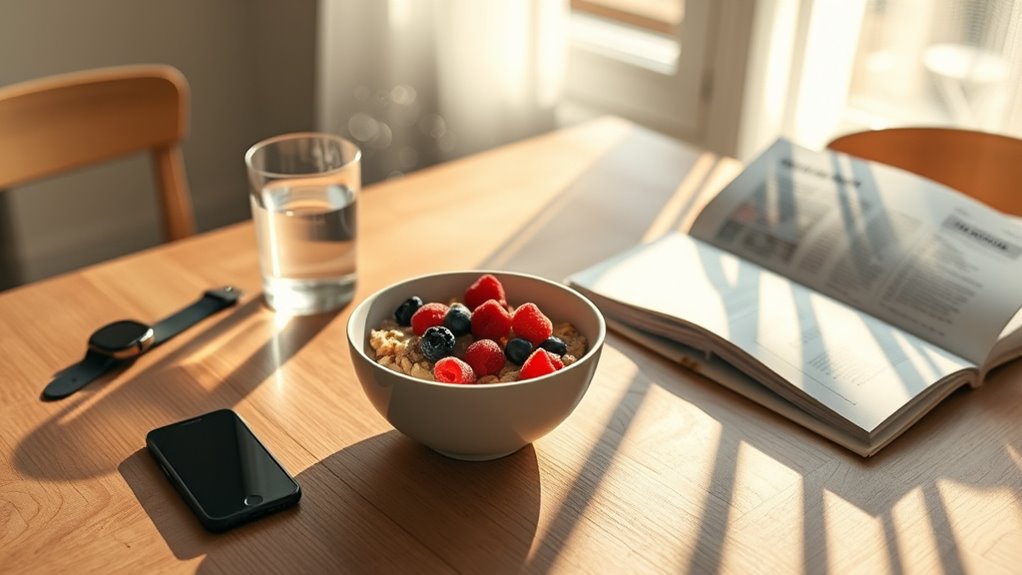
Reducing screen time didn’t just free up hours; it sharpened my appetite, literally and mentally. You probably notice your meals feel more intentional when you’re not grazing through notifications. In practical terms, cutting idle screen time tends to reduce mindless grazing, which means you’re less likely to snack out of boredom or routine rather than true hunger. Evidence suggests that diverting attention from screens can recalibrate appetite signals, helping you distinguish between emotional cues and genuine need. You’ll likely find that your meals become more structured, with regular portions rather than fragmented bites between tasks.
Reducing screen time makes meals feel more intentional and structured.
When you start limiting device use, you may discover a steadier pace to eating. You’ll eat more mindfully because you’re present at the table instead of multitasking with a video or a feed. This matters because mindful snacking isn’t about rigid restriction; it’s about tuning in to hunger and satiety cues. You’ll notice that snacks chosen after traffic of screens tend to be higher in calories and lower in satiety. With less screen distraction, you’re more capable of pausing between bites, assessing fullness, and stopping before you overeat. That pause isn’t a prize; it’s a practical tool grounded in behavior science to prevent overeating.
Sleep quality plays a central role in appetite regulation. As you reduce screen exposure, especially before bed, you’ll likely experience better sleep. Blue light exposure suppresses melatonin, which can delay sleep onset and fragment sleep architecture. Improved sleep supports hormones that regulate hunger—ghrelin and leptin—leading to fewer late-night cravings and more stable daytime energy. With consistent sleep, you’re less prone to seek quick starchy or sugary fixes that offerings of processed foods tempt you toward during fatigue. In practice, you might notice that your breakfast feels more satisfying after a night of solid sleep, helping you avoid mid-morning snacking that’s driven by fatigue rather than hunger.
Beyond sleep, you’ll benefit from a clearer routine. You can establish intentional meal times, reduce grazing, and plan snacks that align with your energy needs. Keep snacks that emphasize protein, fiber, and hydration handy, so when you do snack, you’re choosing nutrient-dense options that support satiety. Track your patterns for a week or two and adjust cues: when you reach for a snack, ask if you’re truly hungry or seeking distraction. If the answer is distraction, reset with a quick activity like a short walk or a glass of water.
If you commit to shortening screen time, you’ll likely experience a calmer appetite signal and steadier energy. You’ll feel more in control of what you eat, how you eat, and why you choose certain foods. The changes aren’t dramatic overnight, but the steady shift toward mindful snacking and better sleep quality can rebalance your relationship with food, yielding healthier patterns that persist.
Common Questions
Do I Need to Cut Screen Time Completely to See Results?
Cutting screen time completely isn’t necessary to see results. You can start by gradually limiting evening scrolling to strengthen appetite cues and reduce mindless snacking. You’ll notice calmer hunger signals, better meal pacing, and more intentional choices. Track responses for two weeks, then adjust. Focus on meals away from devices, use timers, and replace screens with a short walk or water. Consistency beats perfection, and small steps build lasting changes in appetite and behavior.
How Long Before Appetite Changes Appear After Reducing Screens?
Reducing screen time can shift appetite timing within a few days to a couple of weeks. You might notice steadier hunger cues and less grazing late at night as meals feel more aligned with true needs. Consistency matters: track when you feel hungry, not just urge to snack. Expect early changes in meal structure, with gradual improvements over two weeks. Stay mindful of sleep, hydration, and nutrient balance to support this process.
Will Screen Time Reduction Affect Sleep Quality and Mood?
Reducing screen time can boost sleep quality and mood. You’ll likely notice fewer awakenings and steadier energy, with mood changes becoming more stable across days. The effects stem from less blue light and later-night stimulation, plus spending time on restorative activities. Expect improvements in appetite signals as alertness returns. Maintain consistent bedtimes, dim lighting, and daytime activities to sustain benefits. Screen time effects are practical knobs you can adjust for clearer thinking and better sleep.
Is Phone Use at Meals Still Allowed for Mindfulness?
Yes, you can keep some phone use during meals, but aim for mindful meals most days. Use it sparingly to support mindfulness rather than distract, and avoid scrolling. Evidence suggests reducing meal time distractions improves awareness of hunger and fullness cues. If you choose to use your phone, keep it on a low, non-distracting mode and limit duration. This balance helps you observe portions and savor flavors, enhancing satisfaction without overuse.
Which Apps or Tools Help Monitor My Screen Time Effectively?
You can use apps tracking and built‑in digital well being tools to monitor your screen time effectively. Start with habit-tracking features to set daily limits and receive nudges when you’re nearing them. Pair this with goal reminders for meals and focus periods. Evidence suggests compiling weekly summaries helps you adjust behaviors compassionately. Tools like screen time dashboards, app limits, and priority modes should support thoughtful usage without disrupting your routines.