
You might not realize that pairing fiber with protein and healthy fats can slow digestion enough to smooth your afternoon energy curve. When you swap quick carbs for options like crunchy oats, apples with peanut butter, or chickpeas with sesame, you’ll notice appetite hormones staying steadier and fewer hunger spikes. This approach isn’t about more fiber alone—it’s about strategic combos that extend satiety and steady mood. Curious how your next snack can quietly keep you in balance through the post-lunch slump?
Key Points
- Fiber pairing slows digestion by combining soluble gel-forming fiber with protein or fats, smoothing energy delivery after lunch.
- Pairing high-fiber foods with proteins/fats moderates ghrelin and leptin, reducing afternoon hunger surges and cravings.
- Practical mappings, like oats with yogurt or apples with peanut butter, create lasting fullness and fewer energy crashes.
- Rotating fiber-rich pairings maintains satiety signals and prevents reliance on caffeine or quick carbs.
- Focusing on how you pair foods, not total fiber alone, stabilizes mood, focus, and decision-making in the afternoon.
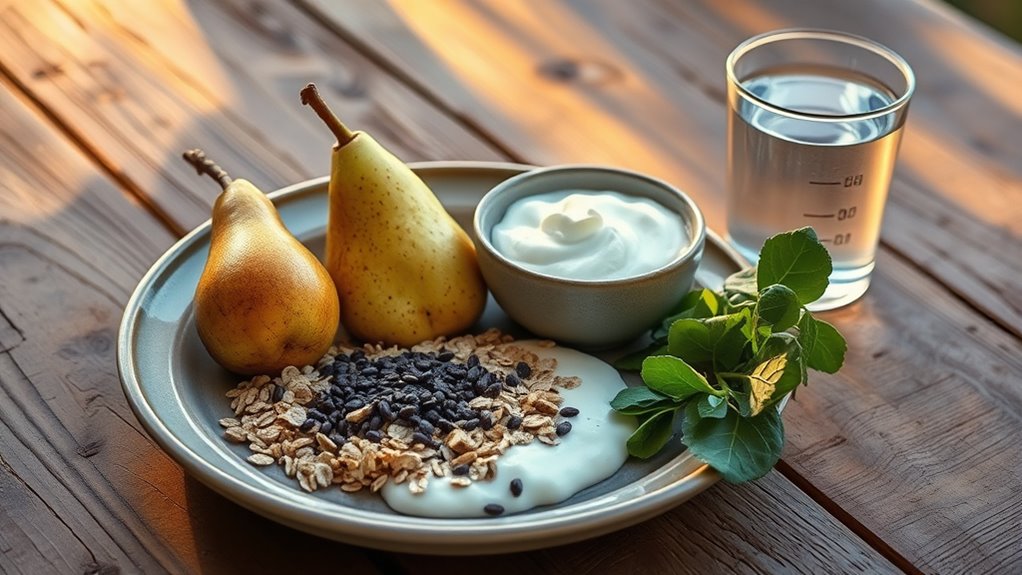
Fiber pairing changed the way I handle afternoon hunger: by combining high-fiber foods with complementary textures and flavors, I kept cravings at bay without a midafternoon energy crash. When you look at the data, you’ll notice how small, steady doses of fiber can blunt peaks in appetite hormones and extend satiety signals. You don’t need extreme meals to see results; you just need deliberate pairings that slow digestion and smooth energy delivery. Fiber pairing isn’t about deprivation; it’s about smarter structure for your day.
In practice, I started by mapping typical post-lunch dips and the snacks I default to when energy wanes. You can do this, too, by noting the foods that trigger quick spikes followed by crashes. Then I experimented with pairing foods that complement each other’s digestion timelines. Think a crunchy whole-grain option with a pairing that adds protein or healthy fats. The goal is to create a balanced bite that sustains focus and avoids the rush for caffeine or sugar.
From a science perspective, soluble fiber forms a gel that slows stomach emptying, while insoluble fiber adds bulk and improves meal transit. When you combine fibers with protein and healthy fats, you’re creating a broader, longer-lasting energy curve. This approach supports hunger management by moderating ghrelin and leptin responses and by delivering a steadier glucose profile. The practical outcome is fewer energy crashes and less impulsive snacking.
To translate this into daily practice, I leaned on simple, repeatable pairings. A snippet: oats with yogurt and berries offers both texture and a protein kick; an apple with peanut butter adds crunch and fat that slow digestion; chickpeas roasted with sesame and olive oil gives a satisfying bite plus lasting fullness. You can rotate these or tailor them to your taste, but the principle stays the same: leverage fiber-rich foods alongside complementary proteins and fats to extend satiety.
I also tracked mood and energy, not just calories. You’ll likely see that afternoon mood stabilizes when you replace quick carbs with fiber-forward options. The data point to remember is not just “how much” fiber you eat, but “how you pair it.” Fiber pairing creates a more predictable energy pattern, aiding consistent decision-making and reducing the likelihood of reaching for random snacks. If you monitor your meals for fiber content and balance, you’ll notice a clearer correlation between your lunch choices and afternoon steadiness.
Ultimately, this approach reframes afternoon eating as a plan, not a reaction. You’ll gain confidence as you observe how deliberate fiber pairing supports hunger management and keeps cravings in check. With repetition, your afternoon becomes less about urgency and more about sustained focus, which proves that science and daily habit can align for real-world results.
Common Questions
How Does Fiber Pairing Affect Blood Sugar Dips After Lunch?
Fiber pairing helps blunt blood sugar dips after lunch by slowing glucose absorption and boosting satiety. When you combine fiber-rich foods with carbs, you get steadier energy and less crash. This practice supports blood sugar stabilization and the lingering fullness you feel mid‑afternoon. In data terms, you’re improving post-meal glycemic response, reducing spikes, and extending energy. So, embrace fiber pairing benefits for a steadier afternoon, and enjoy more consistent focus and fewer cravings.
What Constitutes a Good Fiber Pairing for Snacks?
A good fiber pairing for snacks means combining soluble and insoluble fiber with a bit of protein or healthy fat to slow digestion and stabilize appetite. For afternoon snacks, think apple with peanut butter, oats with yogurt, or veggies and hummus. This supports appetite regulation and steady energy, and it helps snack timing stay on track. You’ll notice fewer spikes, more consistent cravings, and better control over hunger between meals.
Can Fiber Pairing Replace a Balanced Meal?
No, fiber pairing can’t fully replace a balanced meal. You’ll still benefit from a mix of protein, fats, and complex carbs for sustained energy, vitamins, and minerals. Fiber pairing supports fullness and steady glucose, but it isn’t a complete meal replacement. Use it as a snack strategy or add it to meals to boost fiber intake. For best results, combine fiber-rich foods with lean protein and healthy fats.
Are There Any Side Effects From High Fiber Pairings?
Short answer: yes, there can be side effects from high fiber pairings. You might notice gas, bloating, or changes in bowel habits as your gut adjusts. Start slowly, weigh your tolerance, and increase fiber gradually with water. If you have a medical condition or symptoms worsen, consult your clinician. In data terms, gradual increases reduce risk, and you’ll likely stabilize within a few weeks as your gut microbiome adapts, with continued hydration supporting consistency.
Which Fiber Sources Work Best for Afternoon Hunger?
Fiber sources like oats, beans, nuts, and fruit fibers shoulder the best for afternoon hunger, and you’ll want smart snack pairings. For steady fullness, pair protein with fiber and a little fat, e.g., yogurt with berries, almonds, or hummus with veggies. Track portions and fiber totals to avoid GI upset. You’ll notice calmer cravings when you choose balanced snack pairings that keep energy steady, using data-backed fiber sources.