
Spending about 6–8 cups of water daily has been linked to steadier energy and better digestion. You’ll want a morning drink to jumpstart metabolism, hydration with meals to aid absorption, and refills around workouts for performance. Maintain steady intake through the day and use thirst as a cue with caution. Watch urine color to gauge adequacy and avoid megadoses. Curious what a practical cadence looks like for you? Let’s map it out.
Key Points
- Tailor daily fluids to body weight, climate, and activity to support steady metabolism and cognitive performance.
- Distribute hydration: morning wake-up, meals, and post-exercise drinks to sustain digestion and nutrient transport.
- Maintain consistent fluid intake to stabilize plasma volume and reduce fatigue during detail-oriented tasks.
- Increase around exercise and in hot/dry environments to replace sweat losses and sustain performance.
- Use urine color and reminders to cue steady hydration without obsessive tracking.
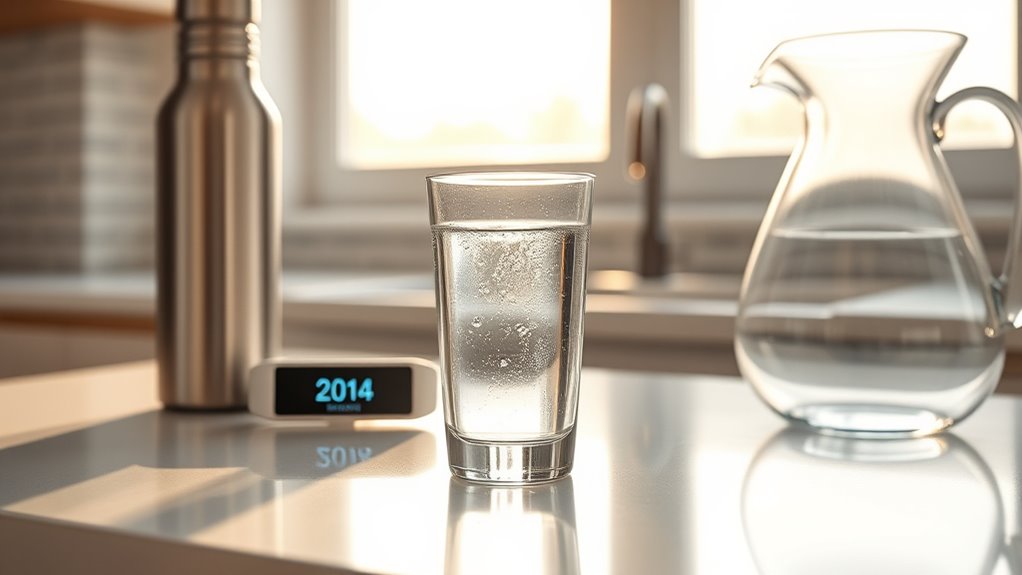
Staying properly hydrated supports metabolism by helping the body efficiently convert food into energy and regulate temperature, so establishing a steady daily pattern matters. You’ll maintain thermoregulation and support digestion when your fluid intake aligns with activity and circadian cues. The goal isn’t a single large intake but a consistent rhythm that sustains plasma volume, optimizes nutrient transport, and preserves cognitive performance during tasks requiring attention to detail. Evidence shows hydration status influences metabolic rate modestly, yet timing matters for how efficiently your body uses calories and processes macronutrients.
Staying hydrated stabilizes metabolism and supports digestion through steady daily fluid timing.
To implement a practical hydration plan, you begin with a baseline amount that suits your body weight, climate, and activity level. Rather than consuming all water at once, you distribute it across the day. Morning hydration supports waking metabolism and can help restore fluid losses from overnight respiration. Midday intake should accompany meals to aid digestion and absorption, while afternoon and post-exercise hydration helps replace sweat losses and maintain performance. Consistency matters; erratic gaps between drinks can cause transient decreases in plasma volume and perceived fatigue, which may be mistaken for hunger.
Consider hydration timing in relation to metabolic enzymes. Adequate fluid availability supports pancreatic and gastric secretions, bile flow, and intestinal transit, ensuring that digestive enzymes interact efficiently with nutrients. When you drink regularly, you’re more likely to maintain enzyme activity levels that facilitate carbohydrate, fat, and protein breakdown. This reduces the likelihood of suboptimal substrate utilization and may influence postprandial energy expenditure modestly. Hydration also influences liver perfusion, a factor in gluconeogenesis and glycogen synthesis, where steady fluid flow helps sustain metabolic fluxes rather than abrupt shifts after dehydration.
Your daily plan should include cues that promote adherence without obsessive tracking. Pair hydration with fixed routines: glass of water with waking, water with each meal, and a pre- or post-activity drink. If you train, increase intake around exercise to offset losses and support recovery. For those in hot or dry environments, adjust upward, listening to thirst as a reliable proxy when you’re unsure about precise needs. Color of urine serves as a practical, noninvasive indicator; pale straw suggests adequate hydration, while darker tones warn you to drink more.
Technology can assist without overwhelming you. A simple reminder schedule reinforces habit formation, and occasional tracking of intake helps you calibrate your baseline. Remember that hydration supports metabolic processes indirectly by preserving intracellular and extracellular fluid balance, which in turn supports enzyme function and substrate processing. The objective isn’t megadoses but a steady cadence that sustains circulatory and digestive efficiency, enabling your body to metabolize nutrients with fewer fluctuations. By prioritizing hydration timing within a daily pattern, you contribute to a more stable metabolic environment and better overall energy management.
Common Questions
How Does Hydration Specifically Boost Metabolic Rate Short-Term?
Hydration can boost your metabolic rate in the short term by supporting thermogenesis and improving substrate turnover. When you’re well-hydrated, your kidneys function efficiently, reducing energy waste, while water intake can transiently raise energy expenditure due to the body’s processing of fluids. Hydration also optimizes circulation and enzymatic activity, aiding fat and carbohydrate metabolism. In the short term, you may notice small rises in metabolism, linked to fluid balance and renal processing of nutrients.
What’s the Best Water Intake Timing for Workouts?
An airplane-sized thirst aside, your best water intake timing for workouts is to hydrate steadily before, during, and after exercise. You should drink about 200–300 ml 15–30 minutes pre-workout, sip 150–250 ml every 15–20 minutes during training, and rehydrate post-workout to replace losses. This hydration timing supports workout performance and helps maintain core temperature. Track urine color to gauge adequacy, and adjust for sweat rate, duration, and environment.
Do Beverages Like Coffee Affect Metabolism Similarly?
Coffee can affect metabolism modestly; caffeine boosts thermogenesis and may enhance short-term energy expenditure, but effects vary. It’s not a metabolic overhaul. Hydration timing matters too: beverages like coffee count toward daily hydration, yet water remains best for pure hydration. So, coffee metabolism changes exist, but don’t rely on it alone for metabolic gains. Use coffee strategically around workouts if tolerated, and optimize hydration timing with water to support overall metabolic processes.
Can Dehydration Mimic Fatigue or Weight Gain Symptoms?
Dehydration can mimic fatigue and influence weight perception; you may feel tired, headaches, or sluggishness when fluids are low. When dehydration persists, your body’s efficiency drops, making exercise feel harder and daily tasks seem heavier. Hydration weight makes fluctuations real, since water balance changes can alter scale readings. Stay adequately hydrated to support energy and mood, monitor symptoms, and adjust intake if you notice persistent fatigue after fluids are rehydrated.
Is There an Optimal Hydration Level by Age or Gender?
Short answer: there isn’t a single universal optimal hydration level by age or gender. Hydration needs vary with body size, activity, climate, and health. Age-based and gender-specific guidelines exist, but they’re estimates, not absolutes. You should listen to thirst, urine color, and performance. For precise targets, consult a clinician or use individualized recommendations from reputable guidelines, adjusting for exercise, heat, and medical conditions. In short, personalize rather than rely on rigid age or gender rules.