
You’ll notice a coincidence: the moment you slow down, your hunger signals start catching up. By putting utensils down between bites and pausing for a breath, you tune into true fullness rather than reflexive tasting. This mindful pause often reduces portion size and steadies energy, while easing late-afternoon cravings. If you stick with it, you might find your appetite becoming calmer and more predictable, a shift worth exploring further with consistent practice.
Key Points
- Slower eating signals fullness earlier, reducing overeating and smoothing energy throughout the day.
- Pausing between bites creates room for satiety cues, helping distinguish true hunger from boredom or stress.
- Mindful pacing shifts appetite patterns, improving portion control without strict dieting.
- Sensory detail while slowing down highlights cues like texture and temperature, refining hunger awareness.
- Implementing one-meal-a-day mindful practice gradually recalibrates appetite, leading to steadier energy and fewer hunger spikes.
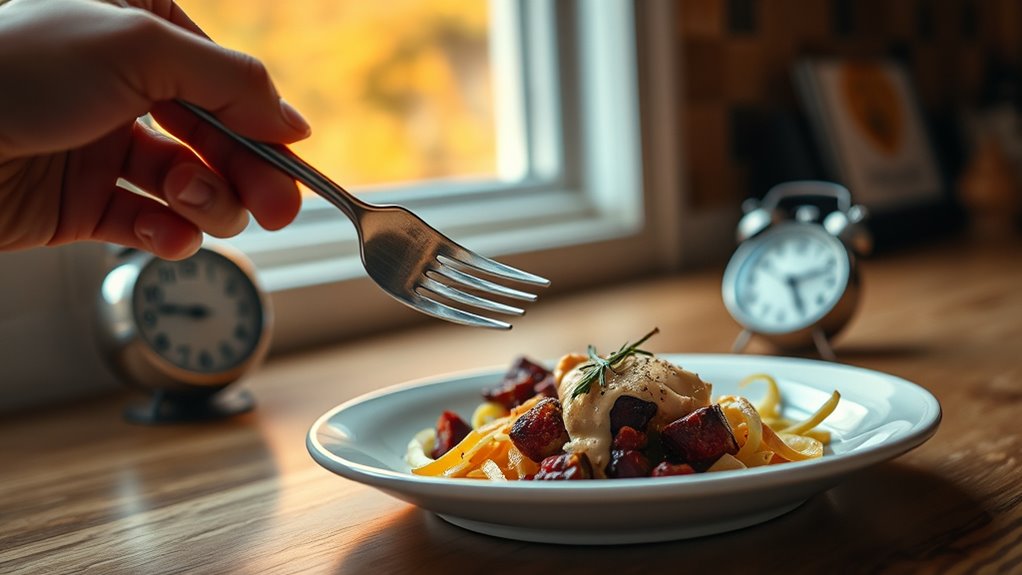
Have you ever wondered why a simple pause before your next bite can change how hungry you feel the rest of the day? When you slow down, you give your body a chance to signal fullness before you’ve already eaten more than you intended. You might notice that meals stretch longer, cravings soften, and daytime energy becomes steadier. The science is clear: eating pace influences meal timing signals, hormonal responses, and your overall appetite pattern. By pausing briefly between bites, you create room for satiety cues to reach your brain, reducing the likelihood of overeating before your next meal.
You don’t have to overhaul every habit at once. Start with a deliberate, single practice: put your utensils down between bites for a breath or two. This tiny pause helps you assess hunger more accurately, rather than responding reflexively to the taste or texture. With repetition, you become tuned into whether you’re truly hungry or responding to boredom, stress, or social cues. That awareness is the core of mindful eating, which has demonstrated benefits for anticipating fullness and improving portion control without strict dieting. By aligning your awareness with your body’s signals, you gain a clearer sense of how much food your current need actually requires.
Mindful eating isn’t about perfection; it’s about accuracy. You may notice that the first few bites are often driven by flavor and novelty, while fullness signals trail behind. Slowing down lets you experience sensory details—temperature, salt balance, chew rate—that can shift your perception of a meal’s adequacy. Over time, this shift translates into better portion awareness. You’ll start distinguishing genuine hunger from routine eating, and you’ll be more intentional about where you allocate calories. The result is a smoother appetite trajectory: fewer spikes, less post-meal lethargy, and a steadier drive for snacks across the day.
Practice can be simple and sustainable. Aim to eat without multi-tasking for at least one meal per day, then extend to snacks if feasible. Use small cues—put your fork down after every few bites, take a short sip of water, or pause and rate your hunger on a scale of 1 to 10 before continuing. Pair these steps with a quick mental check: “Am I still hungry, or just enjoying the experience?” This approach supports portion awareness by helping you gauge whether you need more, less, or just a bit of both.
If you stay curious and patient, you’ll likely notice a natural recalibration of appetite over weeks. You’ll eat more mindfully, feel more in control, and sustain energy without swings. Slower eating becomes a practical tool rather than a burden, and the benefits extend beyond meals, shaping your daily relationship with hunger, appetite, and nourishment.
Common Questions
How Long Before Noticing Appetite Changes After Slowing Down?
You’ll notice slower eating effects within a few days to a couple of weeks, depending on your routine. When you chew longer and savor each bite, appetite timing shifts, and you feel fullness earlier. This coincidence—meal pace meeting your body’s signals—helps you moderate intake sooner than you expect. So, give it at least a week, and track how hungry you feel between meals; benefits tend to accumulate as you persist.
Does Slower Eating Affect Energy Levels During Workouts?
Slower eating can maintain steadier workout energy by preventing post-meal crashes, so you feel steadier during activity. You’ll likely notice improved focus and consistent power output as you optimize insulin responses. Use mindful portion size and craving management to avoid overeating before sessions. Evidence supports that slower eating supports appetite regulation, which supports training consistency. Keep hydration high and timing around workouts regular to sustain energy across sets and reps.
Can Slower Eating Help With Specific Cravings or Binge Episodes?
Slower eating can help with craving reduction, binge management, and appetite awareness. By savoring each bite, you give your body time to register fullness, reducing impulsive snacks. This approach supports you with evidence-based cues: you’ll notice hunger signals and portion satisfaction more clearly. You may feel steadier energy and fewer cravings between meals. Stay present during meals, avoid multitasking, and track triggers to strengthen your appetite awareness and sustain healthier choices over time.
Is There a Recommended Pace or Timing for Meals?
Slowing your eating is worth it. A recommended pace is about 20–30 minutes per meal, with 20–30 bites and a pause after the first 10 minutes to gauge fullness. Use timing guidelines like 5–10 minutes of mindful chewing before swallowing and a brief break between courses. You’ll likely feel satiety earlier and avoid overeating. Evidence supports slower meals for appetite control, reducing cravings, and supporting healthier portions.
Do Portion Sizes Need Adjustment When Eating More Slowly?
Yes, your portion sizes may still need adjusting when you eat more slowly. Slower eating enhances appetite perception, helping you recognize fullness sooner and avoid overeating. Start with smaller portions and wait 10–15 minutes before second servings, then reassess hunger. This approach supports evidence-based cues rather than relying on pace alone. If you frequently feel unsatisfied, consider slightly larger portions of nutrient-dense foods rather than high-calorie items. Track hunger signals to tailor portions to your needs.