
Could it be that a simple pantry choice can shift your gut health for good? You likely keep fiber-rich staples like oats, quinoa, brown rice, lentils, beans, plus nuts and seeds, then add fermented or near-virtuous options like yogurt with live cultures, miso, sauerkraut, and kimchi. You mix in olive oil, avocado, herbs, and tea for balance, plus broths and kefir to round things out. Keep an eye on how these basics support regularity and microbiome diversity as you plan your week.
Key Points
- Fiber-rich grab-and-go snacks like whole fruit, applesauce with live cultures, roasted chickpeas, and high-fiber crackers support digestion and steady energy.
- Fermented staples such as sauerkraut, kimchi, yogurt with live cultures, kefir, or miso add live cultures to meals without dominating dishes.
- Minimal-processed staples like oats, quinoa, brown rice, lentils, beans, nuts, seeds, olive oil, avocado, and fatty fish provide fiber, protein, and healthy fats.
- Hydration and digestion tools including ginger or peppermint tea, diluted apple cider vinegar, low-sodium broths, and miso support gut comfort.
- Build with a foundation of fiber, fermentation, and minimally processed foods, then rotate varieties to sustain diverse gut microbes.
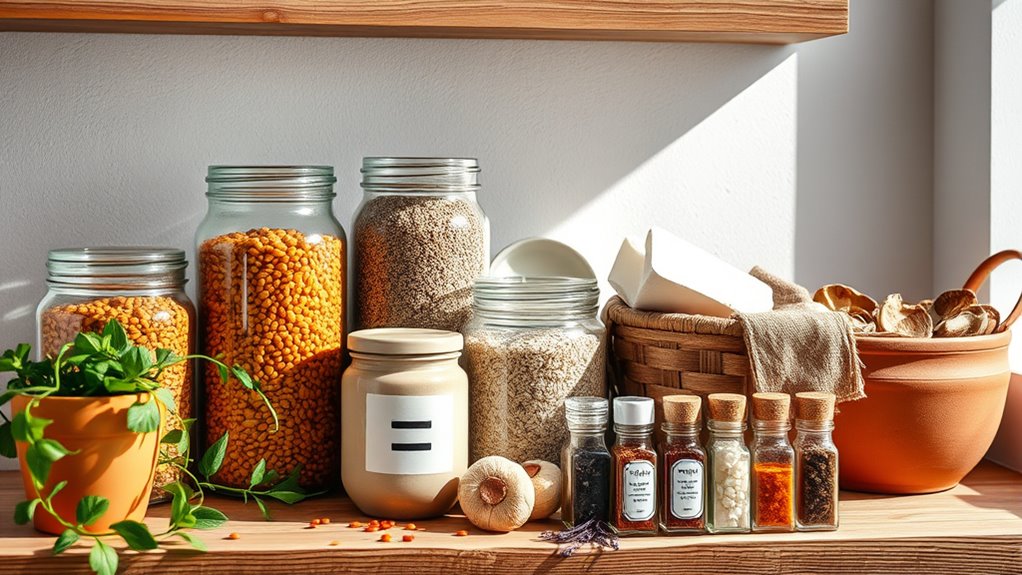
A gut-friendly pantry starts with simple, evidence-based choices you can rely on every day. In practice, you’ll keep staples that support digestive comfort, steady energy, and diverse gut microbes. Start with a foundation of fiber, fermented foods, and minimally processed options, then layer in variety so your pantry isn’t a one-note shelf. You’ll find that certain items routinely show up in gut-friendly rotations because they’re practical, affordable, and reliable.
First, focus on fiber-rich snacks you actually reach for. Fiber helps regulate bowels, feeds beneficial bacteria, and helps you stay full between meals. Keep ready-to-eat fiber-rich snacks that don’t require a lot of prep, like whole fruit, applesauce with live cultures, or a small bag of roasted chickpeas. Add high-fiber crackers or seed-based bars that avoid excess sugar and artificial ingredients. The goal is snacks you can grab when hunger hits, not excuses to abandon your plan. You’ll notice these choices reduce cravings for ultra-processed options while supporting steady energy and smoother digestion.
Fiber-rich, grab-and-go snacks that nourish digestion and curb cravings.
Next, incorporate gut-friendly fermentation at the pantry level. Fermented foods supply live cultures that can augment your gut microbiome and may improve digestion for some people. Pick a starter-friendly item you’ll actually eat—sauerkraut, kimchi, yogurt with live cultures, kefir, or miso paste. Use them as toppings or flavor boosters rather than as the main dish, so you don’t overwhelm your meals with acidity or salt. A small daily or every-other-day portion can yield incremental benefits without requiring complex cooking. Pair fermented items with fiber-rich foods to maximize the prebiotic–probiotic synergy, supporting both diversity and function in your gut.
Then, stock staples that are minimally processed and versatile. Whole grains like oats, quinoa, and brown rice offer fiber, slow energy release, and texture to meals. Legumes such as lentils and beans deliver protein, fiber, and resistant starch when cooled. Nuts and seeds provide healthy fats and fiber, plus crunch that improves satiety. Olive oil, avocado, and fatty fish supply fat-soluble vitamins and anti-inflammatory fats that support gut health. Herbs and spices add flavor without relying on salt, helping you maintain blood pressure and hydration status, which indirectly supports gut comfort.
Keep hydration and digestion tools accessible. Plain tea, especially ginger or peppermint varieties, can soothe digestion after meals. A small jar of apple cider vinegar with the mother can be a gentle starter for diluted drinks or dressings, but use it sparingly. Store a basic selection of low-sodium broths and miso for quick soups, which can ease digestion on heavy days. With consistent, evidence-based choices like gut-friendly fermentation items and fiber-rich snacks, you build a pantry that supports your gut year after year.
Common Questions
Do These Staples Support Specific Gut Conditions (Ibd, IBS, SIBO)?
Yes, these staples can support specific gut conditions and gut health improvement, but results vary by condition. For IBD, IBS, and SIBO, focus on fiber balance, fermented foods, and gentle timelines to reduce triggers. Prioritize evidence-based options like soluble fiber, prebiotic-rich yet tolerable choices, and probiotic-containing foods. Monitor symptoms, adjust portions, and consult a clinician. This approach aims for specific gut conditions management while promoting overall gut health improvement.
How Should I Store Fermented Foods for Maximum Freshness?
Fermented foods keep best in the fridge, typically at 34–38°F (1–3°C). About 80% of flavor and probiotic viability comes from proper cold storage. How to store fermented foods: keep them tightly sealed, away from light, and avoid long exposure to air; check seals regularly. Fresh vs frozen fermentation products: refrigerate fresh items for days to weeks, freeze only if you won’t use them soon, and thaw slowly before eating.
Are Sugar Substitutes Gut-Friendly or Should I Avoid Them?
Sugar substitutes aren’t inherently bad, but they vary in effect on gut health; some may trigger symptoms or affect microbiome balance in sensitive individuals. If you choose them, use in moderation and monitor tolerance. For fermentation storage and freshness guidelines, keep fermented foods in the fridge, sealed, and away from heat. Prioritize whole, fiber-rich options. Base decisions on personal response, and favor evidence-backed forms like moderate sweeteners, avoiding excess sugar to support gut health.
Can These Items Help With Daily Fiber Targets Without Bloating?
Fiber targets can be met with these foods, and yes, they’re generally bloating friendly when you insert them gradually. You’ll want to choose fiber-rich, gut-friendly foods and listen to your body to avoid discomfort. Track daily amounts, sip water, and balance soluble and insoluble fibers for gut health. If you stick to reasonable portions, these items support your fiber targets without causing bloating. Use a practical plan and adjust as needed.
Which Staples Are Best for Travel-Friendly Gut Health?
Travel friendly gut healthy staples include compact fermented foods and shelf-stable fiber sources. For travel, choose options with Fermented food portability, like small jars or packets of kimchi, sauerkraut, or yogurt cups, plus portable fiber: dried beans, oats, or dehydrated fruit. Pack probiotic-rich snacks and a small bottle of water. These choices help maintain gut balance on the go, supporting digestion and stool consistency during trips.