
Hydration gaps can disrupt your digestive rhythm by thickening mucus and speeding water absorption, slowing luminal flow. When you pause or reduce intake, stool becomes firmer and transit slows, increasing dwell time in the colon. Regular, steady hydration helps keep chyme liquid and peristalsis predictable. It’s not just about fluid amount—it’s about timing and consistency. If you’ve noticed uneven stools or a lingering sense of fullness, something small in your hydration pattern might be the key to smoother movement.
Key Points
- Hydration gaps thicken gut mucus, slowing digestion and reducing peristaltic efficiency.
- Under-hydration yields firmer stools and more effortful passes, slowing transit.
- Delayed or intermittent fluid intake lowers luminal water, increasing contact time with absorptive surfaces.
- Less luminal water leads to more water reabsorption, producing drier stools and irregular bowel movements.
- Consistent, small, regular fluid intake supports steady peristalsis and predictable stool form.
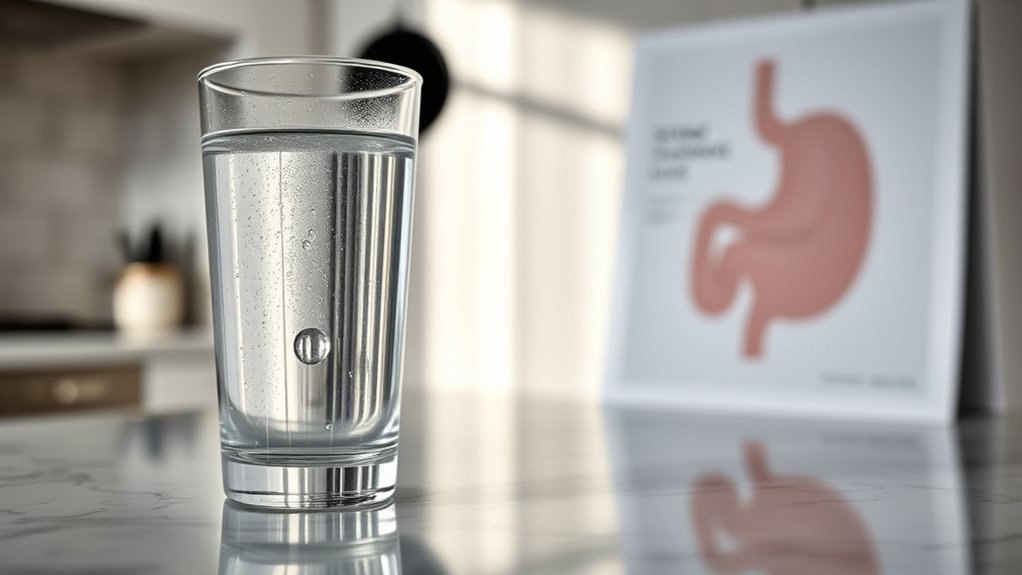
Hydration gaps—periods when you don’t drink enough water—can slows digestion by thickening mucus in the gut, reducing peristaltic efficiency, and altering stool consistency. When you miss regular hydration, your gut lining dries slightly, and mucus can become more viscous, which hampers the smooth movement of contents through the intestines. This creates a less responsive environment for the muscular waves that propel waste forward, increasing the likelihood of slower transit and irregular bowel movements. In practical terms, under-hydration can translate to firmer stools and more effortful passages, especially if you’re not compensating with dietary fiber or physical activity.
Your hydration timing matters because the gut expects a steady influx of fluid to maintain the lubricating layer and optimize enzymatic activity. If you sip intermittently or wait until you feel thirsty, you may experience prolonged periods of reduced luminal water availability. This pattern can degrade stool form and prolong dwell time in the colon, where water reabsorption is most active. Evidence indicates that consistent fluid intake supports predictable stool frequency and reduces the risk of constipation, particularly when paired with fiber. The body adapts to routine drinking patterns, improving the efficiency of water absorption in the small intestine and helping to stabilize stool consistency as it moves toward the colon.
Water absorption is a key mechanism linking hydration to digestion. When you drink water, it’s absorbed along the small intestine, contributing to luminal liquidity and enzyme milieu. Inadequate intake lowers intraluminal water, which can reduce the volume of chyme and slow luminal flow. A slower flow increases contact time between gut contents and absorptive surfaces, which can intensify water reabsorption and yield drier stools. Conversely, adequate hydration maintains chyme liquidity, supports smooth peristaltic contractions, and reduces the effort required by your colon to extract water. Over time, this balance supports more predictable bowel movements and can mitigate episodic bloating associated with transient dehydration.
To optimize digestive flow, align hydration with activity and meals. Small, regular amounts throughout the day promote stable water absorption and steady peristalsis, rather than large infusions at sporadic moments. Pair fluid goals with dietary fiber and, if needed, mild physical activity to stimulate gut motility. In practice, tracking hydration timing helps you prevent gaps; you’re less likely to experience abrupt changes in stool form or transit speed. By maintaining consistent hydration, you support a consistent stool consistency, smoother transit, and fewer digestion-related disruptions, with measurable benefits to overall gut comfort and function.
Common Questions
Do Hydration Gaps Affect Gut Microbiome Immediately?
Hydration gaps don’t usually shift your gut microbiome overnight, you’ll notice the effect more gradually. You might feel dryness or slower transit, but major microbial changes take days to weeks. Hydration gaps can alter stool consistency and nutrient delivery, subtly shaping gut ecology over time. So yes, they matter, just not instantly. Maintain steady intake to support gut microbiome stability, hydration, and digestive flow.
Can Hydration Gaps Cause Constipation vs. Diarrhea Transitions?
Yes, hydration gaps can contribute to transitions between constipation and diarrhea. If you delay fluids, you might start with slower stool, then rapid GI shifts produce looser stool, especially when fiber intake changes. Focus on hydration timing to keep stool more formed and stable. Track stool consistency using a simple scale, and pair fluids with meals. Adequate, regular intake reduces abrupt shifts and supports smoother digestion.
Are Certain Liquids Better During Hydration Gaps?
During hydration gaps, certain liquids are better than others: clear fluids and oral rehydration solutions support gut stability, while high-sugar or highly caffeinated drinks can worsen flux between constipation and diarrhea. Prioritize hydration gaps with water, electrolyte beverages, or diluted fruit juice, and limit alcohol. Liquid choices should focus on osmolality and safety for your stomach. If symptoms persist, seek guidance, and tailor choices to your tolerance and activity level.
How Long to Recover Normal Digestion After a Gap?
Recovery timing varies, but most people see digestion rebound within 24 to 72 hours after a hydration gap, provided you resume balanced meals and fluids. You’ll feel gradual normalization as stool consistency and motility restore. Think of your gut like a clock: with proper signals (fiber, water, regular meals) the hands move steadily. If symptoms persist beyond a few days, consider evaluating for intolerance, dehydration, or GI disturbance with a clinician.
Do Medications Worsen or Mitigate Hydration Gap Effects?
Medications can either worsen or mitigate hydration gap effects, depending on interactions and intake. Certain drugs, like diuretics or laxatives, raise fluid loss, amplifying gaps; others, such as antidiarrheals, may reduce fluid loss. You should monitor medication interactions and adjust hydration strategies accordingly, especially with NSAIDs or antidepressants that affect gut motility. Consult a clinician about personal risks, and tailor hydration strategies to medications, ensuring you maintain adequate fluids and electrolytes during treatment.