
You’ve probably noticed that a glass of water before meals can curb cravings. The idea is simple: a little volume in your stomach signals fullness sooner, reducing hunger-driven snacking and helping you make steadier portion choices. Hydration also supports digestion and pairs well with fiber and protein for lasting satiety. If you try it consistently, you’ll likely see how it shapes energy levels and restraint without feeling deprived—and that could change how you approach your next meal.
Key Points
- Drinking water before meals can curb appetite by creating stomach distension that signals fullness.
- A glass or two consumed 15–60 minutes pre-meal aligns with gut hormone responses to liquid volume.
- Hydration helps distinguish thirst from hunger, reducing misinterpreted cravings and unnecessary snacking.
- Pre-meal water supports portion control when combined with mindful eating and balanced meals.
- Consistent pre-meal hydration, paired with fiber and protein, can lead to steadier energy and fewer grazing episodes.
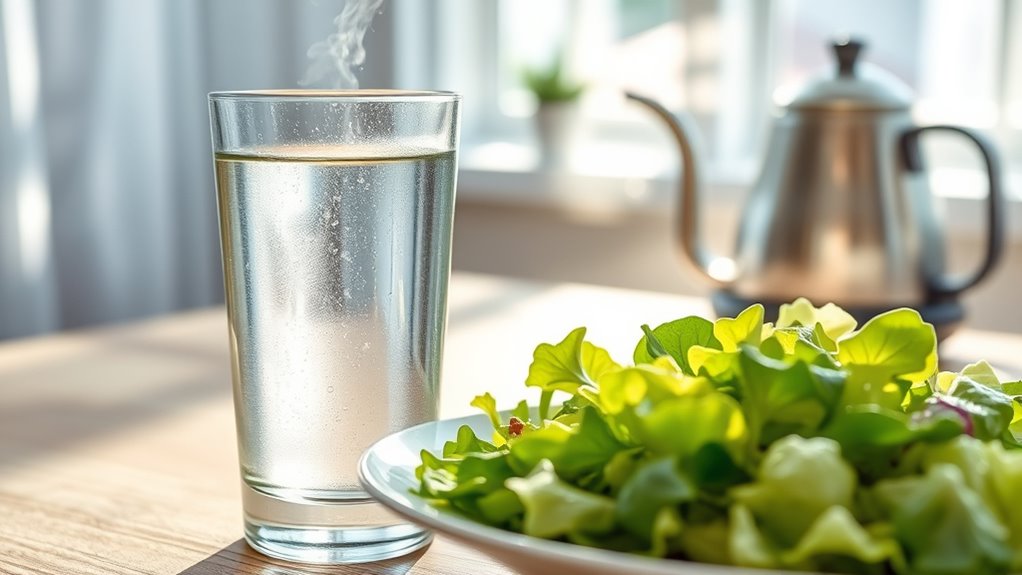
Drinking water before meals is a simple, evidence-based strategy to curb appetite and support weight management. You’ll notice that a small, intentional amount of water can shape how hungry you feel when you sit down to eat. This isn’t about tripping into restrictive rules; it’s about using a neutral signal to guide portions and choices. When you start your meal with water, you’re giving your body a predictable intake that can influence stomach distension and satiety signals. The result is a smoother transition from hunger to fullness without invoking a fight against cravings.
Drinking water before meals helps curb appetite and support steady portion control.
In practice, you’ll want to consider hydration timing as part of your routine. Aim for a glass or two about 15 to 60 minutes before you eat. This window isn’t magic, but it aligns with how your stomach and gut hormones respond to liquid volume. By the time you sit down, you may find you’re less driven to override fullness with extra bites. The goal isn’t deprivation; it’s creating a brief pause that allows appetite cues to become clearer. If you routinely eat very quickly, this pause can be especially helpful.
You should also monitor how different amounts affect you. Some people benefit from a larger pre-meal glass, others from a modest sip. The key is consistency and listening to your body’s signals. If you’re dehydrated, you may misread thirst as hunger, which complicates appetite cues. Prioritize steady hydration across the day so that pre-meal water serves as a precise, not reactive, adjustment.
This approach integrates with other evidence-based strategies rather than standing alone. Pair pre-meal water with mindful eating: slow down, focus on texture and flavor, and notice fullness cues as you eat. Combine it with balanced meals that include fiber and protein, which enhance satiety and help regulate energy intake over several hours. If you notice thirst and hunger tracks diverge, revisit your hydration pattern and meal timing.
You’re not aiming for perfection; you’re pursuing small, repeatable changes that align with your goals. Track how different hydration timing affects your appetite cues and food choices, then adjust. Over weeks, you may observe better portion control, steadier energy, and reduced grazing between meals. If you occasionally skip a pre-meal sip, don’t let that derail your plan—simply return to your routine at the next opportunity.
Common Questions
Does Water Intake Dilute Stomach Acid and Hinder Digestion?
Does water intake dilute stomach acid and hinder digestion? Generally, drinking a moderate amount around meals won’t impair digestion. Your stomach protects itself by producing more acid as needed, so the impact is minimal unless you overdrink. Water can aid digestion by aiding gastric emptying and lubrication. Two word discussion ideas1: water dilution, digestion hindered; two word discussion ideas2: acid neutralization, gastric pH. Overall, stay measured and listen to your body.
How Much Water Is Optimal Before Meals Daily?
You should aim for about 2 cups (480 ml) of water roughly 30 minutes before meals for most adults. This supports optimal hydration without overfilling, and it can help moderate intake during meals. Adjust based on body size, activity, and climate. Keep meal timing consistent and sip steadily. If you routinely urinate frequently or have kidney concerns, consult a clinician. Track hydration daily to ensure proper hydration and maintain comfortable meal timing.
Can Drinking Water Curb Hunger Without Dieting?
Drinking water can curb hunger and support appetite control, even without active dieting. When you sip water, you’re juxtaposing emptiness and fullness, a quiet contrast that often reduces cravings. You’ll feel less tempted to snack as you hydrate, because fluids briefly stretch your stomach and signal satiety. This isn’t a miracle cure, but a practical habit: stay hydrated, pace meals, and rely on water to modulate appetite alongside balanced eating.
Does Temperature of Water Affect Appetite Control?
Yes, temperature can influence your appetite. Cold water may feel more filling due to quicker gastric emptying delays, while warm water can soothe and aid digestion, but the effects are modest. Rely on hydration cues to gauge your needs, not just temperature. Track hydration cues, drink consistently, and consider temperature effects as a small factor in your overall strategy. Stay proactive: stay hydrated, and use temperature as a subtle tool rather than a primary appetite control.
Are There Risks or Contraindications to Pre-Meal Water?
Yes, there are some risks and safety considerations to be aware of before you drink water pre-meal. In rare cases, excessive intake can dilute electrolytes or cause fullness that complicates eating enough for your needs. If you have kidney, heart, or fluid-retention conditions, consult your clinician first. Monitor for bloating, dizziness, or abdominal discomfort. Ideas for safer use include sipping slowly, spacing around meals, and tracking your tolerance to tailor your approach.