
You notice a coincidence: a small, protein-forward snack at night can align with smoother mornings, if you time it right. You’ll want about 150–250 calories, like yogurt with chia or a hard-boiled egg with cucumber, kept light to avoid heavy digestion. Finish eating at least 60 minutes before bed, sip water lightly, and consider sleeping on your left side to ease gas movement. There’s more you can tweak to prevent bloat—but the key might be in your nightly routine.
Key Points
- Choose a protein-forward, low-salt snack with a touch of fiber to support overnight digestion and reduce morning bloat.
- Prioritize easy-to-digest foods with a gentle, steady release, minimizing fermentable carbs and inflammation.
- Finish eating at least 60 minutes before bed and keep portions modest to protect overnight gut rhythm.
- A small glass of water with the snack is fine, but avoid large fluid intake in the final hour to prevent reflux.
- Practical options: yogurt with chia, hard-boiled egg with cucumber, or whole-grain toast with almond butter, around 150–250 calories.
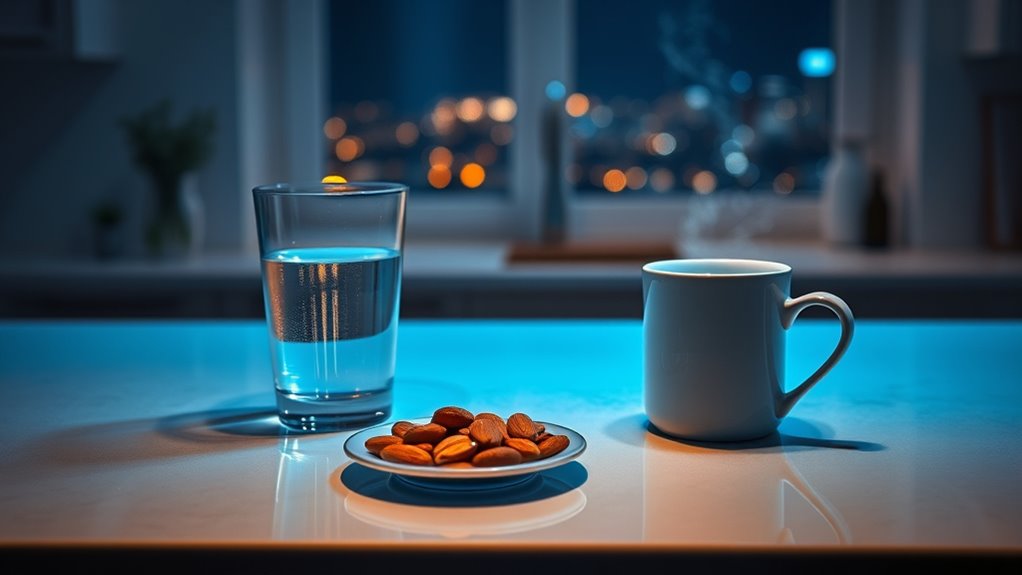
If you’ve ever woken up feeling puffy or bloated, the simplest fix might be a smart nighttime snack—one that supports digestion while you sleep. The idea behind this approach is practical: small, targeted nutrients can influence how your gut settles overnight, reducing the likelihood of morning bloat. You’ll want a snack that’s easy to digest, low in salt, and balanced with protein and a touch of fiber. This isn’t about overeating; it’s about thoughtful timing and composition that align with your nighttime physiology.
Evidence suggests that digestion slows during sleep, so choosing foods with a gentle, steady release helps prevent gas buildup and water retention. A protein-forward option with a little fiber can stabilize blood sugar and appetite signals, reducing late-night snacking urges that contribute to bloating. Think of snacks that are naturally anti-inflammatory and low in fermentable carbohydrates, which can exacerbate gas for some people. Keeping portions modest maintains your digestive system’s normal overnight rhythm.
Your nighttime routine matters as much as the snack itself. Aim to finish eating at least 60 minutes before bed to give your stomach a head start on digestion. Hydration remains important, but you don’t want to drink large amounts right before lying down, which can promote reflux or distention. A small glass of water with your snack is fine, but avoid excess fluids in the final hour. Sleep position can influence how gas moves; sleeping on your left side may encourage smoother digestion for some people, though individual comfort matters most.
Consider snack ideas that meet these criteria: around 150 to 250 calories, modest fat content, and a balance of protein and fiber. Options include a small bowl of yogurt with chia seeds, a hard-boiled egg with a few cucumber slices, or a slice of whole-grain toast with almond butter. Some people find a handful of almonds paired with a piece of fruit to be effective, provided the portion stays reasonable and the fruit is not overly high in fructose. If dairy is an issue, a non-dairy yogurt with flax may serve as a suitable alternative. Avoid high-sodium snacks, processed foods, or large portions late at night, as these can worsen morning bloating.
Common Questions
Can the Trick Work for Everyone Regardless of Age?
No, it won’t work equally well for everyone. Age related effectiveness varies, and metabolic differences across ages influence how your body handles late snacks. In younger people, digestion and sleep quality might respond differently than in older adults. So while some may benefit, others won’t see the same results. Consider individual factors like metabolism, medical conditions, and sleep patterns to assess whether this trick applies to you, safely.
Should I Skip Dinner Entirely to Avoid Bloat?
Skipping dinner isn’t advised for most people. You can still avoid bloat by moderating portions and choosing light, easy-to-digest options closer to bedtime. This isn’t about deprivation; it’s about timing and rhythm. A light meal or snack can fit, but avoid heavy fats and big carbs. For your approach, focus on discussion ideas and Dinner timing to tailor guidance to you, backed by evidence. You’ll decide what works best for your body.
How Long After Eating Can I Lie Down Safely?
You should wait about 2–3 hours after eating before lying down to reduce reflux and bloat, and to give your stomach time to digest. If you’re comfortable, a short, light walk can help. Lying down sooner may increase symptoms and disturb sleep. Consider your meals’ size and content, since heavy or fatty meals delay digestion. How long after eating can i lie down safely? About 2–3 hours, depending on tolerance and sleep impact.
Will This Affect Sleep Quality or Dreams?
Yes, it can affect sleep quality and dream effects, though usually modest. If you time meals so digestion timing aligns with lying down safety, you may notice fewer awakenings and smoother sleep transitions. A light snack 1–2 hours before bed is often fine; heavy meals can disrupt REM. Keep portions small, avoid spicy or fatty foods, and monitor how digesting at night influences your sleep quality and dream effects.
Is There a Risk of Rebound Bloating Later?
You ask about rebound bloating: yes, there’s a potential for temporary rebound if you overcompensate with food, but it’s usually minimal with steady habits. To avoid it, aim for balanced portions, regular meals, and hydration. Long term sustainability matters more than quick fixes. If you stop the routine suddenly, you might notice mild changes, but it shouldn’t cause chronic issues. Track your responses, adjust gradually, and prioritize evidence-based, sustainable choices.