
You might not realize that rotating a weekly fermented seasoning can gently nudge your gut microbes toward more balanced signaling. You’ll get live microbes and fermentation cues, plus polyphenol-rich spices like ginger, turmeric, cinnamon, oregano, thyme, and black pepper to support motility and calm inflammation. Pair that with mindful salt and occasional apple cider vinegar to balance electrolytes and modulate gastric flow. This approach hooks you with flavor and tangible daily benefits, inviting you to try it consistently.
Key Points
- Rotate one live-fermented seasoning weekly to introduce beneficial microbes and fermentation-derived signals for gut health.
- Use herbs like ginger, turmeric, cinnamon, oregano, thyme, and black pepper to modulate gut motility and inflammation.
- Balance salt and vinegar with meals to support electrolyte function and modestly influence gastric timing and microbiota.
- Build dense sauces or marinades rich in fiber, polyphenols, and beneficial microbes for daily gut-friendly benefits.
- Maintain a weekly routine of fermentation and herb use, varying options to broaden metabolite exposure and digestive comfort.
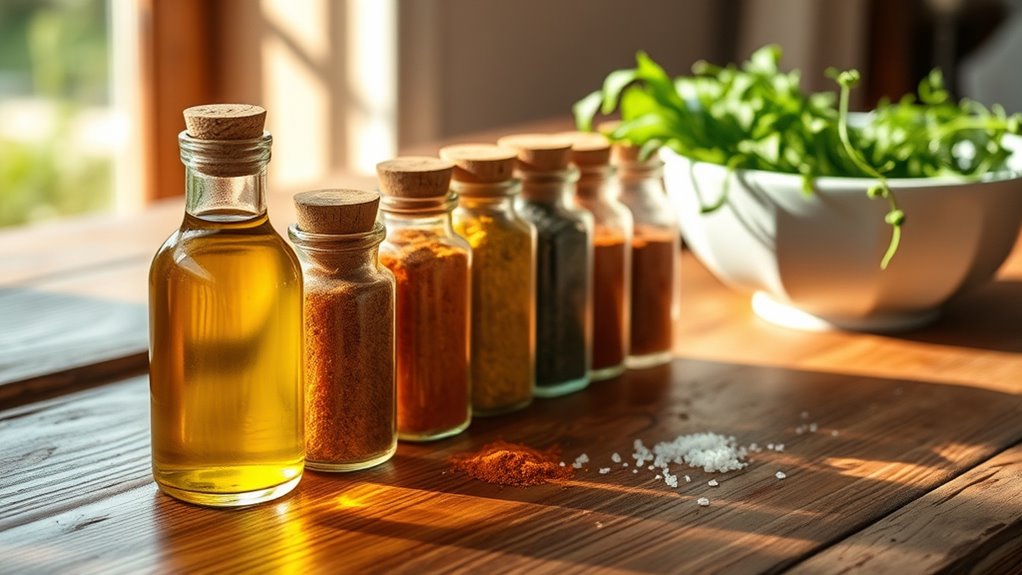
Ever wonder which everyday seasonings support gut health without sacrificing flavor? You’re not imagining it: small tweaks to your pantry can shift digestion, immunity, and even mood, without turning meals bland. I’m focusing on practical, evidence-based choices you can start today, with clear reasoning behind each pick. You’ll notice each intention is to support your gut through both direct microbial action and overall gut-friendly nutrition.
First, let’s talk about seasoning fermentation in a broad, actionable sense. Fermented spices and condiments introduce live beneficial microbes and increase metabolite diversity, which can support a balanced gut microbiome. When you opt for naturally fermented products—think certain misos, brined spices, or lactic-fermented hot sauces—you’re adding small, recurring doses of microbes and fermentation-derived compounds. This isn’t about novelty; it’s about reproducible metabolic signaling that can influence gut barrier integrity, inflammation, and transit time. You don’t need a full pantry overhaul—start by incorporating one fermented seasoning into a weekly rotation and observe changes in taste, digestion, and energy. If a product labels live cultures or a fermentation date, that’s your cue it’s contributing to gut microbiome benefits without extra fuss.
Next, emphasize herbs and spices with empirical support for gut health. Ginger, turmeric, cinnamon, oregano, thyme, and black pepper aren’t just flavor boosters; they contain polyphenols and bioactive compounds that can modulate gut motility, reduce inflammatory markers, and modify microbial composition subtly. You’ll often notice improved satiety and steadier post-meal comfort when these are used consistently rather than sporadically. Pair them with healthy fats to optimize absorption of fat-soluble polyphenols, and vary your choices weekly to broaden the spectrum of beneficial metabolites reaching the colon. The goal isn’t masking flavor but enhancing it while supporting digestive function.
Salt and vinegar aren’t villains, but choose quality and balance. Sea salt with trace minerals supports electrolyte balance, which can influence smooth muscle function in the gut, while apple cider vinegar, used sparingly, may modestly affect gastric emptying and microbial activity. If you consume these, do so with meals to maximize synergy with fiber and microbiota-derived metabolites.
Finally, keep portions reasonable and meals fiber-forward. A dense sauce or marinade made from miso, garlic, chili, and citrus can deliver flavor, beneficial microbes, and polyphenols in one serving. You’ll build a repertoire that sustains gut-friendly benefits, without sacrificing the pleasure of eating. With consistent use of seasoning fermentation and well-chosen herbs, you’ll cultivate a practical, evidence-based approach to daily flavor that supports your gut and your overall well-being.
Common Questions
Are These Seasonings Suitable for Low-Fodmap Diets?
Yes, these seasonings can fit a low-FODMAP plan with care. Fermented herbs may add tang without packing FODMAPs, and citrus zest is typically low in FODMAPs in small amounts. Yet, watch portions and individual tolerance. Use evidence-based swaps, note hidden high-FODMAP ingredients, and favor fresh herbs over blends with onion/garlic. If unsure, test a small amount first, track symptoms, and adjust. Your gut-friendly approach should feel practical, not restrictive.
Do They Affect Sodium Intake or Blood Pressure?
Yes, these seasonings can influence sodium impact and blood pressure depending on their salt content. If you’re salt-conscious, choose low-sodium blends to improve sodium impact and monitor blood pressure effects, especially with high intake. They don’t harm low fodmap suitability when formulated without high-FODMAP ingredients. Consider dietary fiber considerations from any added fibers; they can aid gut health. Track portions, and consult a clinician for personalized guidance on sodium and BP targets.
Can I Use Them During Pregnancy or Breastfeeding?
Yes, you can use most gut-friendly seasonings during pregnancy and breastfeeding, but check each ingredient for safety. Stick to moderate amounts and avoid high-sodium blends that raise blood pressure. When in doubt, consult your clinician. For pregnancy safety, choose herbs and spices with established safety profiles in pregnancy and limit essential oils or concentrated extracts. For breastfeeding guidance, ensure flavors don’t upset baby, and watch for sensitivities. Always verify labels and opt for whole-food seasoning options.
How Do These Spices Interact With Medications?
Some spice med interactions can occur, so you should check with your clinician before mixing potent spices with prescription meds. Generally, small, routine amounts are low risk, but certain compounds can affect metabolism (cytochrome P450) or blood clotting. Gut friendly cautions: monitor any unusual symptoms, avoid taking supplements with meds, and report changes promptly. Use evidence-based guidance, start with low doses, and keep a med-weekly log to discuss with your pharmacist or prescriber. Where in doubt, pause and ask.
Which Brands Provide the Best Gut-Friendly Options?
Which brands have gut friendly options? Look for brands with gut friendly ingredients, solid sourcing and labeling practices. You’ll want transparent ingredient lists, third‑party testing, and minimal additives. Prioritize those that disclose fermentation processes, non-GMO sourcing, and allergy awareness. I’d recommend mainstream wellness lines plus small-batch producers that publish sourcing maps and gut‑health claims backed by evidence. Compare labels, verify claims, and choose brands with consistent quality control to support your gut-friendly goals.