
Like a quiet anchor in a storm, meal prep steadies your gut over days you’d otherwise unpredictably swing. You’ll repeat a few core meals with steady fiber, protein, and fats, which helps digestion run on a predictable rhythm. Batch cooking creates reliable portions and timing, so surprise cravings don’t derail your plan. Tracking how each meal feels and functions gives you actionable tweaks, gradually shaping a calmer gut—and a morning routine that feels almost inevitable.
Key Points
- Consistent fiber intake through meal prep smooths digestion and reduces gut variability over days and weeks.
- Planning and batching meals lowers last-minute choices that disrupt gut rhythm and energy levels.
- Rotating core meals with varied fiber sources strengthens gut microbiome resilience and predictability.
- Recording outcomes from prepared meals helps identify combinations that promote smoother mornings and steadier energy.
- A steady meal routine provides reliable signals for stool form, satiety, and overall gut comfort.
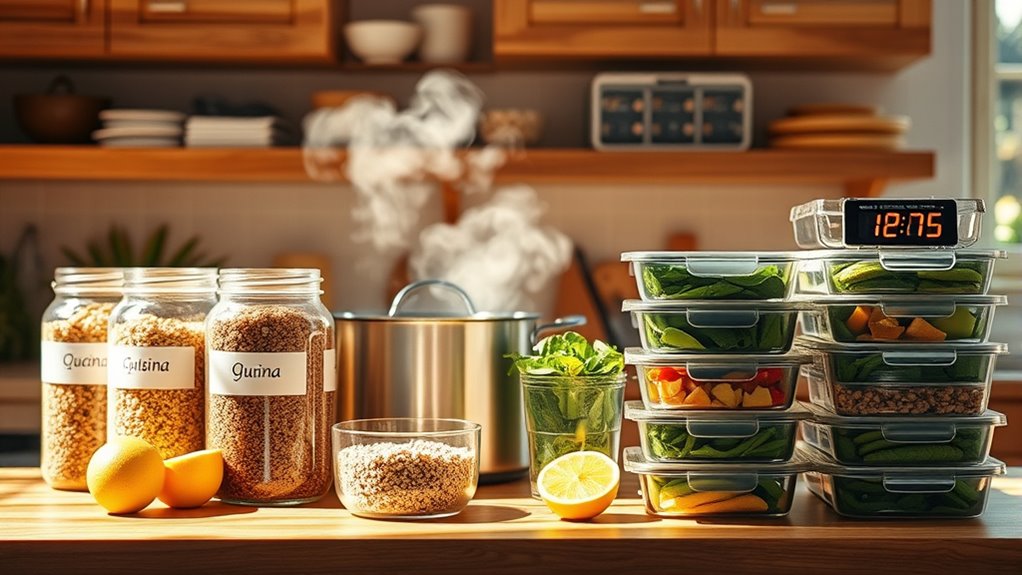
Meal planning hasn’t just organized my week—it sharpened my sense of my gut. When you start meal planning, you’ll notice patterns emerge about how your gut responds to meals, fibers, and portions. You’ll see that meal prep isn’t just a time saver; it’s a practical way to gather real data on your digestion. By preselecting balanced plates, you create predictable inputs for your gut microbiome, which helps stabilize your digestion over days and weeks. You’ll learn which foods trigger gas, bloating, or irregularity, and you’ll adjust before symptoms escalate.
Meal planning reveals how meals shape my gut’s rhythm and signals.
You can measure progress without complex tests. Documented patterns, such as smoother digestion after consistent fiber intake or calmer evenings with lower fat loads, become your personal evidence base. When you prepare meals ahead of time, you control ingredients, portions, and timing. That control matters because the gut microbiome responds to dietary cues—varying fiber types, polyphenols, and resistant starch shapes microbial communities and byproducts. Consistency, not perfection, is your ally; gradual, steady changes support more reliable gut signals than sporadic, impulsive eating.
A practical approach starts with a simple framework. Pick a few core meals you can rotate, ensuring enough variety in fiber sources—beans, whole grains, vegetables, and fruit. Include cheaply available, gut-friendly options like fermented foods in modest amounts if you enjoy them. When you batch cook, you can diversify spices and legumes across the week, which broadens microbial substrates without overwhelming your system. Your goal is to feed the gut microbiome enough to strengthen resilience while avoiding heavy, unfamiliar loads that fatigue digestion.
You’ll notice that meal prep also reduces decision fatigue around meals. With a plan in place, you reduce the likelihood of last-minute, gut-disrupting choices. The predictable sequence—plan, prep, portion, and plate—lets you forecast how a given meal might affect your gut. If you record outcomes, you’ll identify which combos promote smoother mornings or steady energy, and you’ll refine accordingly.
Over time, you’ll observe that a stable routine supports consistency in stool form, energy levels, and satiety cues. The gut won’t be perfectly predictable every day, but the trend lines will align with your preparation efforts. The key is persistent, mindful adjustment rather than drastic shifts. When you keep meal prep at the center of your routine, you give your gut microbiome a steady rhythm to follow, and your gut responds with steadier signals, fewer surprises, and improved confidence in your daily choices.
Common Questions
How Long After Meal Prep Do Gut Changes Typically Occur?
Gut changes can start within days of consistent meal prep, though noticeable shifts often appear over 2–4 weeks. You’ll likely observe improvements in gut transit and reduction of bloating as fiber, fiber types, and regular meals stabilize. Microbial shifts respond to the pattern, timing, and variety of foods you choose, so give it a few weeks for stable trends. Stay patient, track symptoms, and adjust portions to support ongoing gut health and predictable digestion.
Can Meal Prep Affect Gut Microbes Beyond Digestion?
Can meal prep influence gut microbes beyond digestion? Yes, you can shift microbial communities through fiber diversity, resistant starch, and polyphenol intake, boosting microbial resilience and probiotic compatibility. Align meal timing with circadian eating, choose fermented options, and maintain hydration strategies. Consider prebiotic timings, gluten considerations, dairy options, plant-based proteins, and anti-inflammatory foods to support gut motility and micronutrient balance. Mind fiber thresholds to sustain gut brain link and circadian rhythms.
What Ingredients Best Support a Stable Gut in Prep Meals?
To support a stable gut in prep meals, choose fiber-rich foods like oats, beans, fruits, vegetables, and whole grains, plus fermented options such as yogurt or kefir. Prioritize fiber stability by spreading intake evenly across the day, and mind probiotic timing by consuming probiotics with or just after meals for better survival. Aim for variety to nourish diverse microbes, and keep hydration steady to help digestion and stool consistency.
Does Meal Prep Reduce GI Symptoms for Everyone?
Does meal prep reduce GI symptoms for everyone? Not necessarily. It can help some people by fostering regularity, consistency, and easier avoidance of triggers, but responses vary. The role of meal prep in standardized gut support lies in planning fiber, hydration, and moisture, while allowing personalized adjustments. You may notice improvements, yet others might not, so monitor symptoms, tailor portions, and consult a clinician if issues persist. Consistency matters more than perfection.
Should I Adjust Fiber When Starting Meal Prep?
Yes—when you start meal prep, you should adjust fiber slowly. Increase gradually to prevent gas and bloating, and monitor how your gut reacts. If you’re making changes quickly, you might trigger symptoms. Use gut friendly swaps like easily digestible vegetables, peeled fruits, or oats. Balance fiber with fluids. Track responses and adjust as needed. This approach supports consistent prep, while incorporating adjusting fiber and gut friendly swaps for smoother digestion.