
You can make your meals gentler on your gut without a full overhaul by adding small, steady tweaks—think fiber boosts in soups, a sprinkle of chia seeds, or roasted veggies to add volume. Pair protein with fiber, switch frying for gentler sautéing with olive oil, and toss in onions and garlic for flavor and digestion signals. Steam or roast to preserve nutrients, stay hydrated, and note how each tweak lands. Curiosity about which combo works best for you will keep you moving forward.
Key Points
- Add fiber-rich foods in small, easy-to-handle ways, like beans in soups or chia seeds on yogurt, to boost gut health with minimal changes.
- Swap frying for sautéing in olive oil, and add onions or garlic to support digestion and flavor without major overhauls.
- Hydrate consistently and drink water with meals to support stool form and gut transit, while trying dairy options like yogurt or kefir if tolerated.
- Use herbs, spices, lemon juice, turmeric, or cumin to enhance flavor and gut-friendly benefits, reducing reliance on salt and fat.
- Track simple, gradual changes and their effects on digestion and energy to fine-tune meals over time.
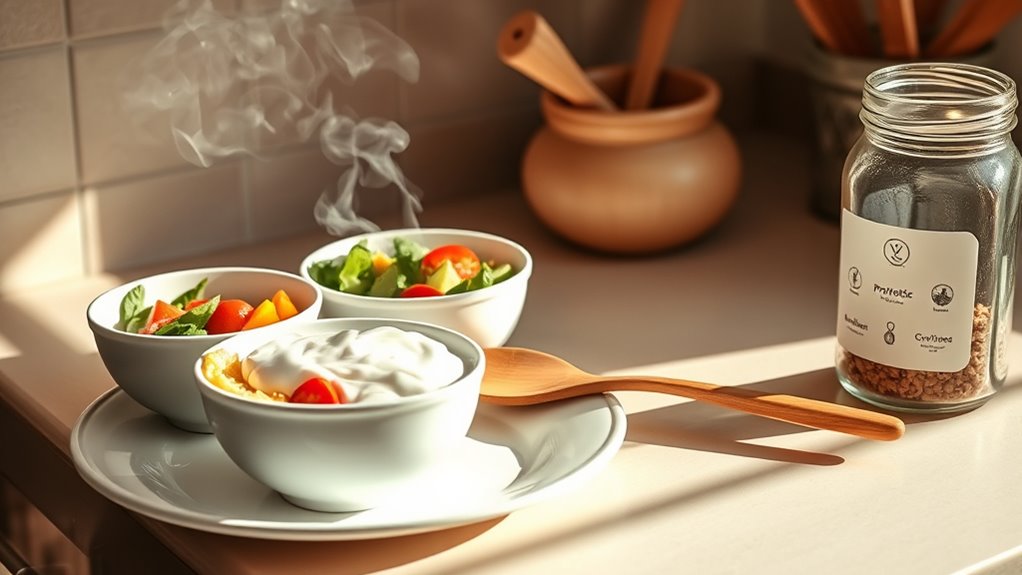
I started making small tweaks to my meals to support gut health without overhauling my routine. You’ll notice subtle shifts that add up without demanding a total diet redesign. The focus is on practical, evidence-informed steps you can weave into meals you already enjoy. You don’t need fancy ingredients or dramatic overhauls—just a handful of gut friendly choices that fit your day.
First, you can lean into small changes during prep and plating. Add fiber-rich foods in easy-to-handle ways: a handful of beans or lentils sparked into soups, stews, or salads; a sprinkle of chia seeds over yogurt or oats; or a handful of roasted vegetables that increase both fiber and volume. These subtle tweaks help diversify the gut microbiome and support regularity, without turning every meal into a project. The goal isn’t perfection, it’s consistency over time with simple swaps.
Add fiber-rich tweaks like beans, chia, or roasted veggies to meals for steady gut support.
Next, consider how you cook and pair foods. If you usually fry, try sautéing with olive oil and adding onions or garlic, which not only boost flavor but can support gut health through your palate’s signaling and digestion. You might switch to gentler cooking methods occasionally, like steaming or roasting, to preserve nutrients that support gut function. Pair meals to improve digestion: a protein source with fiber-rich sides creates a balanced load that your gut handles more smoothly. These small adjustments are gut friendly because they reduce digestive strain while maintaining taste.
Another entry point is hydration and timing. You don’t need a special regime; just drink water with meals and keep a steady intake through the day. Hydration helps stool consistency and gut transit, making meals feel more comfortable. If you enjoy dairy, observe tolerance and consider yogurt with live cultures or kefir as occasional additions. These choices remain gut friendly when they fit your budget and preferences, providing probiotic and nutrient value without complicating meals.
Mindful seasoning can also make a difference. Favor herbs, spices, and vinegars that enhance flavor without piling on ultra-processed ingredients. A squeeze of lemon, a dash of turmeric, or a pinch of cumin can elevate a dish and reduce the desire for heavy, gut-irritating flavors from excessive salt or fat. You’ll notice the impact in both taste and how you feel after eating.
Finally, keep a simple, attainable record of what you try and how you feel. Note any improvements in digestion, energy, or satiety, and adjust gradually. The aim is to maintain your routine while integrating gut friendly habits through small, sustainable changes. With patience and consistency, your meals become more supportive of gut health—without demanding a dramatic rewrite of what you already enjoy.
Common Questions
How Soon Will I Notice Gut Benefits From These Tweaks?
“Aside from a gentle nudge, expect days to weeks.” You’ll notice subtle changes in digestion within a couple of weeks, but full gut benefits often take several weeks to months. how soon aroma? you may appreciate improved scent cues as plants and spices settle in. texture changes? you’ll feel more consistent meals and easier waste. stay consistent, track symptoms, and adjust fiber, fermented foods, and hydration thoughtfully for steady progress.
Do These Changes Affect Taste or Texture Significantly?
There is some taste impact and texture changes, but they’re usually subtle. You’ll notice milder flavors if you add gut-friendly tweaks gradually, and texture shifts are typically slight—think softer fibers or gentler crunch. Evidence suggests moderation matters more than drastic swaps. If you notice any unfamiliar taste, scale back and reintroduce items slowly. Quick note: keep hydration and meal timing stable to minimize perceptible changes while you assess personal tolerance.
Are There Any Foods to Avoid Long-Term?
“Better safe than sorry,” so yes—there are foods to avoid long-term. You’ll want to limit highly processed meats, excessive added sugars, and ultra-processed snacks, plus reduce alcohol if you’re sensitive. Focus on avoidance strategies like gradual fiber increases, diverse plant foods, and regular meal timing. Long term consequences of neglecting gut health can include bloating, discomfort, and dysbiosis. You’ll notice clearer digestion, gentler tolerance, and steadier energy when you prioritize nutrient-dense, minimally processed choices.
Can I Apply Tips to Both Meals and Snacks?
Yes, you can apply tips to both meals and snacks. The key is consistency and tailoring: use gut-friendly principles in portioning, fiber balance, and gentle intro of fermented or prebiotic foods. For snack strategies, plan portable options and pair fiber with protein or healthy fats to curb cravings. In meals, you’ll benefit from varied textures and slower carbs. Tip: track what works, adjust, and keep guidance simple to preserve evidence-based practicality. Tips applicability remains strong across contexts.
Is Professional Guidance Needed for Gut Issues?
Yes, professional guidance can be valuable for gut issues. Imagine a map unfolding: if symptoms persist, a clinician or dietitian helps you chart routes you hadn’t seen. You’ll get personalized strategies, not one-size-fits-all advice. While some guidance comes from reputable sources, professional guidance offers tailored plans, monitoring, and safety. If you have persistent or severe symptoms, seek help promptly. Gut issues deserve careful evaluation to avoid unnecessary experiments and to support your overall well-being.