
Daily fiber goals helped you lose weight by boosting fullness and slowing digestion, creating a simple, measurable target you can track each day. You swapped refined grains for high-fiber options, added legumes, berries, and apples to meals, and ensure at least one fiber source per meal plus snacks. This approach reduced calorie intake without increasing hunger, while gradual increases and extra fluids kept digestion comfortable. There’s more to consider as you adjust to this pattern and sustain results.
Key Points
- Daily fiber targets provide a practical, measurable lever to support weight loss by promoting satiety and stable blood glucose.
- A 25–38 gram daily fiber range, increased gradually with fluids, aids fullness without excessive calories, supporting a moderate energy deficit.
- Combining soluble and insoluble fiber from oats, legumes, fruits, vegetables, and whole grains improves fullness and regularity.
- Integrating fiber into all meals and snacks (one fiber source per meal) sustains motivation and reduces decision fatigue.
- Tracking total daily fiber like calories or protein helps adjust planning, grocery lists, and meal prep for steady progress.
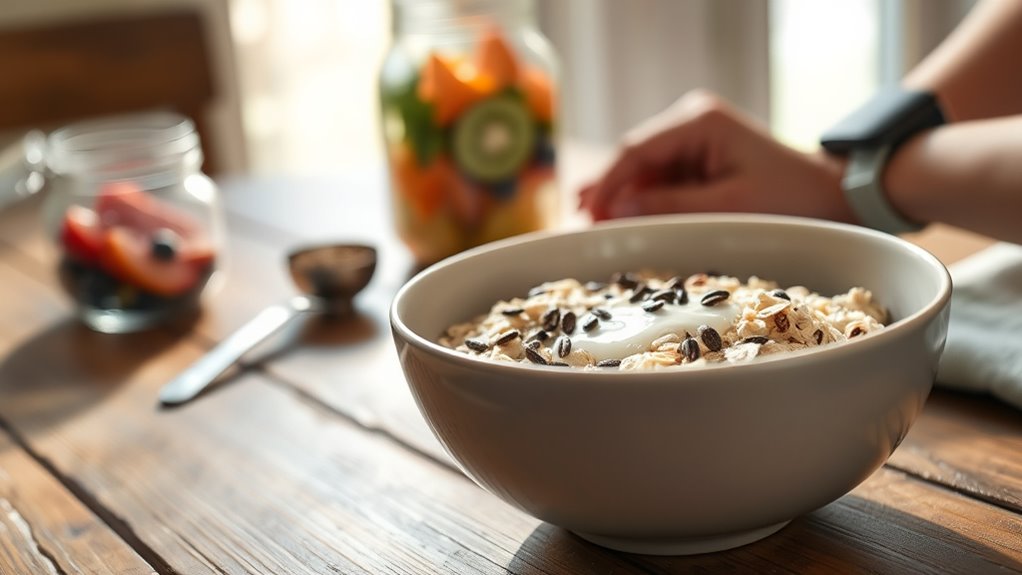
Daily fiber goals are a practical, evidence-based lever for supporting weight loss. When you set a daily target, you create a concrete, measurable behavior that you can track, adjust, and repeat. Fiber works by increasing satiety, slowing digestion, and stabilizing blood glucose, which helps you feel fuller longer and reduces spikes that can drive overeating. You’ll notice that meals with adequate fiber tend to be more satisfying without adding excessive calories, making it easier to maintain a moderate energy deficit over time.
Your daily plan should align with your current intake, activity level, and weight trajectory. Start by estimating fiber needs, then translate that into practical targets, such as roughly 25 to 38 grams per day for adults, depending on age and sex. If you’re new to higher fiber, increase gradually to prevent gastrointestinal discomfort, and pair fiber with adequate fluids to support digestive comfort. You’ll benefit from a mix of soluble and insoluble fiber—soluble fiber from oats, legumes, and fruits helps with fullness and slower absorption of nutrients, while insoluble fiber from whole grains, vegetables, and peel contributes volume and regularity.
Internal motivation matters here, but it’s the structure that sustains it. You’ll build momentum by integrating fiber goals into your overall daily routine rather than treating them as a standalone constraint. Consider your morning, midday, and evening meals as opportunities to incorporate fiber-rich choices. For example, swap refined grains for whole grains, add legumes to soups or salads, and include berries or apples with snacks. The more you plan, the more fiber you’ll consume without feeling deprived.
Meal planning becomes your core tool for consistency. You’ll craft a simple framework: at least one fiber source per meal, plus a couple of fiber-rich snacks if needed. Track total daily fiber as you would calories or protein, so you see real progress and can adjust portions. Use grocery lists and prepared meal formats to reduce decision fatigue; batch-cook beans, chop vegetables, and portion fruit to streamline daily execution. If your schedule is tight, select high-fiber staples that require minimal preparation, such as oats with berries, yogurt with chia, or a lentil-based quick bowl.
Evidence supports that fiber-rich patterns can improve weight management by reducing energy intake and promoting fullness signals. You’ll want to monitor weight trends alongside satiety, energy, and digestive comfort, recognizing that fiber’s benefits accrue over weeks to months. If you experience temporary GI symptoms, ease into the plan and distribute fiber intake evenly across meals rather than clustering it in one meal. By tying internal motivation to actionable meal planning steps, you create a sustainable approach where daily fiber goals support your weight loss, without sacrificing dietary quality or practicality.
Common Questions
Does Fiber Intake Affect Sleep Quality?
Fiber intake can affect sleep quality, but the effect is modest and varies by person. You may notice steadier energy and fewer nighttime awakenings when your fiber comes from whole foods, aiding digestion and comfort. Consider fiber and sleep, aiming for a balanced daily mix and gradual increases. Sleep quality factors include timing, caffeine, and stress, so address these alongside fiber. If sleep issues persist, discuss with a clinician for personalized guidance.
Can You Overdo Fiber During Weight Loss?
Yes, you can overdo fiber during weight loss. Too much fiber too quickly can cause potential GI distress, bloating, gas, and constipation if fluid intake isn’t increased. Start with a moderate amount and gradually ramp up, aiming for a balanced mix of soluble and insoluble fiber. Monitor tolerance, stay hydrated, and adjust portions. If symptoms persist, revisit your intake with a clinician to avoid negative impacts on appetite, nutrients, and overall adherence.
Which Fiber Supplements Work Best for Weight Loss?
You can’t rely on a single supplement for weight loss; fiber supplements may help, but results vary. Choose products with soluble fibers like psyllium husk, glucomannan, or methylcellulose, and start low, then increase with plenty of water. For weight loss, pair supplementation with whole-food fiber, balanced meals, and activity. Clinical evidence favors psyllium for satiety and modest weight changes. Avoid laxative misuse, monitor tolerance, and consult a clinician if you have GI or medical concerns.
How Does Fiber Impact Appetite Hormones?
Fiber affects appetite hormones by slowing gastric emptying and enhancing satiety signals, which helps you feel fuller longer. This impacts hormone signaling related to hunger and fullness, potentially lowering ghrelin and increasing peptide YY and GLP-1 responses. Practically, aim for consistent fiber intake from foods like fruits, vegetables, and whole grains. Hydration matters too. Evidence-based guidance suggests gradual increases to avoid GI discomfort, and monitor how your appetite and energy balance respond over several weeks. Fiber and satiety support steady weight management through hormone signaling.
Is Fiber Needed if Calories Are Controlled?
Yes, fiber is still helpful even if calories are controlled. Does fiber influence satiety, metabolic rate, sleep? It can boost fullness, which supports portion control, and may modestly improve glycemic response. It has little direct impact on metabolic rate, but you’ll feel steadier energy, aiding adherence. Some people notice better sleep thanks to steadier blood sugar. Prioritize soluble fiber first, gradually increase, and pair with adequate hydration for practical, evidence-based benefits.