
Pacing your meals can slow digestion enough to reduce gas and cramping, giving your gut time to signal fullness and curb overeating. By chewing deliberately, sipping small amounts of water with meals, and pausing between bites, you may notice fewer bloating episodes over weeks. Tracking symptoms helps you spot patterns and adjust portions without feeling deprived. A gradual 10–15 minute shift can become a sustainable routine, leaving you curious about what else your gut can tolerate.
Key Points
- Slower eating reduces gut distension by giving digestion time to signal fullness and ease bloating.
- Mindful chewing lowers gut workload and aids early satiety, preventing overeating that worsens gas.
- Starting with 15–25 chews per bite and pausing between bites improves hunger assessment and tolerance.
- Moderate fluids with meals, and sipping 30–60 minutes after, prevent dilution of stomach acids and bloating.
- A progressive, tracked plan (food, portions, timing) helps identify patterns and sustain reduced bloating over weeks.
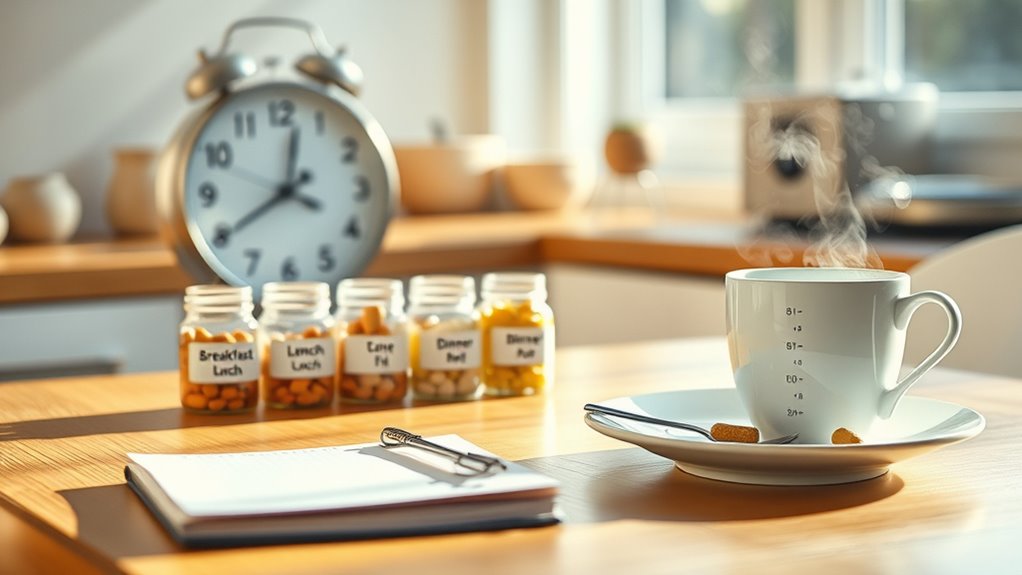
Eating meals more slowly and spacing them out throughout the day can considerably reduce bloating. When you pace your eating, you give your gut time to signal fullness and slower digestion to begin, which can lessen pressure that leads to distension. This approach isn’t about rigid rules; it’s about practical habits you can sustain. You’ll likely notice less gas, fewer cramps, and a calmer relationship with meals over time. Your goal is consistency, not perfection, so you can tailor timing to your schedule and symptoms.
A key element is mindful chewing. By focusing on each bite, you break down food more thoroughly before it enters your stomach, which can reduce the workload your gut experiences. You may discover that chew-count habits help you detect satiety sooner, preventing overeating that often follows distractions or rushed meals. Mindful chewing also supports better saliva mixing, which starts digestion earlier and can improve tolerance for fibrous foods. Start by aiming for 15 to 25 chews per bite, then pause briefly between bites to assess hunger and fullness. This simple habit provides actionable feedback about how your body handles meals.
Post meal hydration matters, too. Hydration supports digestion and can ease transit time, but timing matters. Drink small, steady sips across the day rather than large amounts with meals, which can dilute stomach acids and slow digestion for some people. A modest glass with each meal can help, as can a post-meal sip about 30 to 60 minutes after finishing. If you notice lingering fullness or bloating after drinking with meals, consider shifting most fluids to before or after meals rather than during. Individual responses vary, so you may need to experiment to find your ideal pattern.
Your daily plan should emphasize gradual changes rather than sweeping adjustments. Start by adding a 10–15 minute slower eating window to one meal per day. Once you’re comfortable, extend that pacing to another meal or two. Pair pacing with mindful chewing and consistent hydration habits to reinforce the effect. Track symptoms, not calories or rules; note which foods, portions, and timing correlate with bloating. If certain foods reliably trigger symptoms, consider smaller portions, slower introduction, or alternatives. Keep a food and symptom diary for several weeks to identify clear patterns.
Evidence supports slower eating and attentive chewing as modest, feasible strategies for functional bloating and dyspepsia symptoms. Your experience matters most: you’re the expert on how you feel day to day. If symptoms persist or worsen, consult a clinician to rule out other causes and discuss personalized plans. With steady practice, you can reframe meals as a manageable part of your day rather than a source of discomfort.
Common Questions
Can Pacing Meals Impact Digestion Comfort Beyond Bloating?
Pacing meals can improve digestion comfort beyond bloating by reducing rushed swallowing, minimizing air intake, and supporting smoother gastric emptying. With mindful eating, you’ll tune into your hunger cues, pause between bites, and chew thoroughly, which lowers stress-related gut reactions and promotes more stable post-meal energy. This approach also helps prevent overeating, lowers reflux risk, and may lessen discomfort after large meals, guiding you toward gentler, more predictable digestion.
What Triggers Gas When Meals Are Rushed?
Rushed meals can trigger gas due to swallowing air and poor chewing efficiency, which reduces digestion efficiency and fermentation in the gut. When you hurry, you swallow more air and don’t break down food well, increasing gas release as bacteria process undigested portions. To counter this, slow your pace, take smaller bites, and chew thoroughly. This improves chewing efficiency and reduces gas release, supporting more comfortable digestion and evidence-based relief.
Does Pacing Affect Appetite or Hunger Signals?
Yes, pacing affects appetite and hunger signals. When you slow down, you notice appetite cues more clearly, helping you eat in tune with your sense of fullness and hunger regulation. You’ll likely improve digestion timing, since extended meals give your stomach time to signal satiety before overfilling. This patient-centered approach supports mindful intake, reducing overeating urges and supporting steadier energy. Practice steady bites, pauses between mouthfuls, and mindful awareness to align eating with bodily cues.
Are There Foods That Benefit Most From Slower Eating?
Yes—foods that benefit most from slower eating include high-fiber, fatty, and protein-rich options, since their digestion benefits from mindful chewing. You’ll notice timing cues and satiety signals more clearly when you pace meals, especially with dairy, legumes, and whole grains. Practicing mindful chewing helps you pace intake, supporting slower eating. For these foods, use mindful chewing and pacing to interpret fullness accurately, guiding portion size and preventing overconsumption.
How Long to Practice Pacing Before Noticing Changes?
You’ll likely start noticing changes after about 2 to 4 weeks of consistent pacing meals. If you’re patient-centered, track how you feel: digestion comfort, less gas, and steadier fullness. How long you practice pacing matters less than consistency and mindful chewing, slower bites, and pauses between mouthfuls. By sticking with it, you’ll create a calmer digestion rhythm, supporting nutrient absorption and reduced bloating. Stay curious, note patterns, and adjust pace to your body’s cues.