
You’ve got a simple rhythm that keeps digestion moving: steady hydration, a mix of soluble and insoluble fiber, and meals that aren’t rushed. Sip water throughout the day, pair fluids with meals, and adjust for activity or heat. Favor gradual fiber increases from fruits, veggies, legumes, and whole grains, with a focus on consistency and light post-meal movement. Track your symptoms to spot trends and fine-tune the routine, because small tweaks matter more than wholesale changes.
Key Points
- Hydrate steadily across the day and with meals to aid digestion and stool movement.
- Mix soluble and insoluble fiber from fruits, vegetables, legumes, and whole grains.
- Structure regular, slower meals to synchronize motility and reduce post-meal discomfort.
- Include daily movement or short bouts after meals to stimulate peristalsis and gas passage.
- Track simple symptoms and stress, adjusting hydration, fiber, and meals to improve digestion over time.
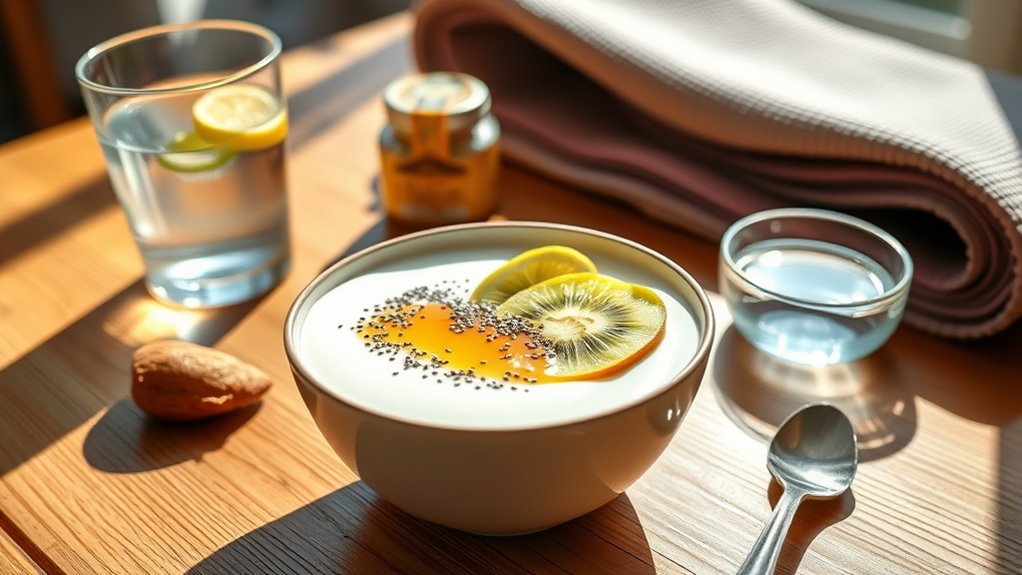
Digestive health starts with simple, daily habits that support gut function and comfort. Your mini-routine isn’t dramatic; it’s steady, evidence-informed behavior you can sustain. You’ll begin with predictable patterns that reduce noise in your system and support regularity. First, hydration matters. You don’t need heroic amounts—aim for steady intake across the day, with water paired to meals to aid breakdown and transit. If you’re active or in warm environments, adjust upward, and listen for signs of thirst or lightheadedness rather than chasing a fixed number. This baseline helps move stool more efficiently and reduces constipation risk.
Hydration steady across the day supports regular digestion and stool movement.
Next, fiber quality beats sheer quantity. You’re looking for a mix of soluble and insoluble fibers from whole foods—fruits, vegetables, legumes, whole grains. Soluble fiber forms a gel that softens stool and slows digestion enough to improve glucose control; insoluble fiber adds bulk and speeds transit. Introduce fiber gradually to minimize gas and bloating, and pair it with fluids. A daily target isn’t a one-size-fits-all rule; tune it to your tolerance and stool patterns. If you notice discomfort, back off slightly and reintroduce later.
Meal timing and structure also influence movement. You’re not chasing perfection here, just predictable rhythms. Regular meals help synchronize motility and hormonal signals. Eating slowly reduces air swallowing and post-meal discomfort. Avoid large, heavy dinners when you know you’ll be sedentary afterward; a lighter evening composition supports smoother transit overnight.
Movement remains a potent drawer of transit energy. You’re encouraged to incorporate daily activity, even in short bursts: a brisk walk after meals, simple stretches, or a few minutes of light resistance work. These actions stimulate peristalsis, aid gas passage, and can decrease symptoms for many people. The key is consistency, not intensity.
Stress management supports digestion too. You’re not evading stress by pretending it doesn’t exist; you’re adopting practical strategies. Slow, mindful breathing, short breaks, and routine sleep patterns reduce gut sensitivity and cramping for many. When stress spikes, you may notice shifts in bowel habits; use the same routines to regain tone.
Digestive myths still circulate, and you’ll encounter claims about “perfect timing” for probiotics or miracle foods. In practice, you want reliable patterns: hydration, diversified fiber, steady meals, movement, and sleep. Probiotic timing matters less than overall diet quality for most people, and benefits vary by strain and individual. If you consider probiotics, select evidence-backed strains, and take them consistently with meals or as directed, but don’t expect instant cures. Listen for your own signals and adjust.
Finally, keep a simple symptom log for a few weeks. Note bowel timing, stool form, gas, bloating, and any foods that consistently provoke symptoms. Use that data to fine-tune your routine rather than chasing single foods or quick fixes. Your mini-routine prioritizes ongoing balance, practical choices, and personal responsiveness, so digestion moves more smoothly day by day.
Common Questions
How Long Should I Wait Before Activity After Meals?
Waiting a bit after a meal helps digestion, so you should aim for a 10–30 minute waiting period before vigorous activity. Hydration timing matters too—sip water lightly during and after meals, but avoid chugging right away. For light post meal activity, a short walk can be beneficial. If you’re exercising intensely, wait 2–3 hours after eating. This approach balances energy use, reduces discomfort, and supports better digestion overall.
Can I Drink Water During Digestion Without Affecting It?
Yes, you can drink water during digestion without derailing it. Water supports digestion pace by aiding stomach and intestinal processes. Space large sips around meals to avoid diluting gastric acids; sip consistently, not constantly. Consider probiotics timing and fiber urgency: take probiotics after meals if advised, and increase fiber gradually with water. Stay hydrated to optimize stool softness and transit. Keep water intake steady, and adjust based on thirst cues and activity level.
Do Probiotics Need to Be Taken Daily for Results?
Probiotics don’t have to be daily for everyone, but consistency helps many people see benefits. If you’re aiming for gradual shifts in gut balance, daily supplementation supports steady exposure to beneficial strains. Consider probiotic timing: many people do best on an empty stomach or with a small meal, then wait before other meds or fiber. Track your symptoms and give it several weeks to judge effectiveness, adjusting dose or strains as needed.
Will Coffee Ruin My Morning Digestion Routine?
Short answer: coffee can affect your gut, but it doesn’t have to ruin your routine. If you drink it black and on a consistent timing, you may tolerate it. Pay attention to coffee timing to avoid jitters or acid reflux, and adjust your morning pace if needed. For gut comfort, consider pairing with a small snack or delaying until after hydration. Track symptoms to see what works best for you.
Is Fiber Intake Linked to Urgent Bathroom Needs?
You’ll want to know this: yes, fiber intake is linked to urgency, especially if you jump from low to high intake quickly. Start gradually and monitor your body. In your routine, focus on fiber basics—both soluble and insoluble types—and spread intake with meals. Fiber timing matters, so you may want a modest fiber bump in the morning and another with lunch. Track how you feel, adjust, and stay hydrated for smoother digestion.