
Eating the rainbow feeds a wider range of gut microbes by delivering diverse fibers, polyphenols, and resistant starches. This variety supports distinct microbial niches, boosts short-chain fatty acid production, and helps balance fermentation over time. You’ll likely notice steadier digestion and better barrier signals as communities adapt. It’s not just about color—it’s about substrates that shape microbes. There’s more to why this works, and a few key patterns to consider as you plan your meals.
Key Points
- Colorful plant foods indicate diverse polyphenols, flavonoids, and resistant starches that feed a wide range of gut microbes.
- Different colors provide varied substrates reaching multiple colon sections, supporting a broader microbial ecosystem.
- Polyphenols and pigments modulate microbial gene expression and enzyme activity, shaping fermentation and metabolite production.
- Fiber diversity, not just total fiber, creates distinct microbial niches and improves resilience to dietary changes.
- Practical rainbow-focused eating links to measurable gut biomarkers and steadier gut function over time.
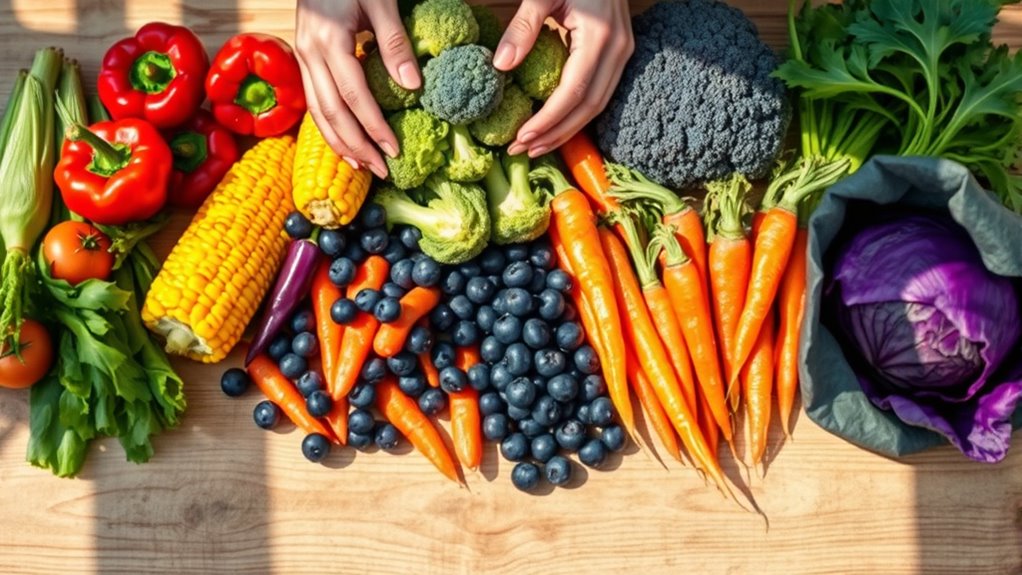
We know that different colored fruits, vegetables, and whole grains host distinct plant compounds and fibers that feed various gut microbes; by including a spectrum of hues in your meals, you can support a more diverse and resilient gut microbiome. You’ll find that colorful foods contribute a range of polyphenols, flavonoids, and resistant starches that reach different sections of the colon, where they influence microbial composition and metabolite production. This isn’t about chasing a trend; it’s about aligning your choices with evidence showing that diverse substrates support a broader microbial ecosystem. When you eat pigments from berries, leafy greens, carrots, beets, legumes, and whole grains, you provide multiple fiber types and bioactive compounds that different microbes preferentially utilize. The result is more balanced fermentation patterns, fewer inflammatory signals, and greater stability across daily variations in your diet.
The concept of colorful fibers guiding microbial resilience rests on several mechanisms. Diverse fibers escape digestion in the small intestine and become substrates for colonic bacteria, promoting growth of different taxa. Polyphenols and other micronutrients can modulate microbial gene expression and enzymatic activity, shaping pathways linked to short-chain fatty acid production, such as butyrate, acetate, and propionate. These metabolites play roles in gut barrier integrity, immune signaling, and energy harvest from fiber-rich meals. In practical terms, you don’t need perfect variety every day; across a week, a pattern of fiber diversity trains your microbiome to adapt to fluctuating intakes without signaling excessive gut inflammation or dysbiosis.
To optimize outcomes, target a spectrum of plant-based foods across meals. Include beans or lentils several times weekly to boost resistant starch and phytonutrient load. Add at least three different colors across vegetables and fruits daily, aiming for red, orange, yellow, green, blue-purple, and white items where feasible. Choose whole grains like oats, barley, brown rice, or quinoa to introduce varied fermentable substrates. Incorporate nuts, seeds, and a modest amount of fermented foods to supply additional microbial exposures. Remember that fiber diversity matters as much as total fiber; a wide array of fiber types supports more distinct microbial niches and reduces reliance on any single substrate.
In practice, this approach links dietary variety to measurable biomarkers of gut health. Expect subtle improvements in stool form, transit, and energy harvest without dramatic or abrupt changes. If you track intake, you’ll notice that days with more color variety correlate with richer microbial signals and steadier digestive comfort. In short, prioritizing colorful fibers across meals bolsters fiber diversity, nourishes a broader microbial community, and strengthens gut resilience over time.
Common Questions
How Quickly Can Rainbow Foods Improve Gut Diversity?
Rainbow foods can prompt early microbial shifts within days to weeks, but you’ll see meaningful gut diversity changes over weeks to months with consistent intake. Quick uptake of fiber and polyphenols supports diverse taxa, especially with varied colors. Expect some shifts in stool patterns and bloat relief as diversity expands. Maintain a steady diversity of plant foods, monitor how you feel, and note that sustained consumption yields the most robust microbial shifts over time.
Do Synthetic Colors Count Toward “Eating the Rainbow”?
Do synthetic colors count toward “eating the rainbow”? Not really, because food coloring is not a nutrient source and doesn’t add diverse plant compounds that support gut bacteria. Synthetic colors provide no fiber, polyphenols, or prebiotics. You can still include them in moderation for aesthetics, but expect minimal gut-health benefits. For evidence-based eating, prioritize whole fruits, vegetables, and fiber-rich foods over food coloring and artificial additives.
Can You Overdo Fruit Variety for Gut Health?
Overdoing fruits isn’t likely to harm most people, but you can overshoot fiber intake and cause bloating or digestive discomfort. Balance matters: variety supports gut microbes, yet extreme fruit consumption may elevate sugar load and affect fiber tolerance. Focus on a diverse mix, whole fruits, and vegetables across colors. Monitor fiber impact: add gradually, drink water, and adjust if you notice gas or loose stools. Your gut benefits from moderation, not excess.
Are There Risks With High-Fiber Rainbow Foods?
Yes, there are potential risks with high-fiber rainbow foods. You may experience bloating, gas, and temporary alterations to stool when you suddenly increase intake, especially from high-fiber rainbow foods. If you have a sensitive gut, start gradually and hydrate well. For most people, a diverse, high-fiber diet supports gut health, but aim for balance to avoid intolerance. Monitor symptoms, and consult a clinician if persistent issues arise.
Should Kids Eat the Rainbow Every Meal?
Yes, you shouldn’t push kids to eat the rainbow at every meal. Aim for balanced, kid-friendly portions rather than perfection. A practical approach supports childhood nutrition while avoiding overloading on fiber. Track fiber balance across the day, mix colors, and offer variety without forcing. This evidence-based method helps establish colorful habits that protect gut diversity while meeting growth needs. Remember, consistency beats perfection, and gradual introductions build lasting, healthy eating patterns.