
You’ll notice that pairing fats with fiber shifts how you digest and feel after meals, typically slowing emptying and smoothing glucose and insulin responses. When soluble fiber forms a gel and meets fat, this effect strengthens, supporting steadier energy and longer satiety. It’s not about big doses, but mindful combos—like legumes with a drizzle of olive oil or yogurt with ground flax. Start small, observe how those bites land, and you’ll see patterns emerge that invite you to keep exploring.
Key Points
- Pairing fats with soluble fiber slows gastric emptying, moderating blood sugar spikes and promoting steadier glucose and insulin responses.
- Fat–fiber synergy enhances satiety by extending nutrient exposure to gut receptors, reducing later overeating.
- Soluble fiber forms a viscous gel with fat, delaying carbohydrate transit to the small intestine.
- Practical approach: combine moderate healthy fats with fiber-rich foods (e.g., avocado with legumes, flaxseed in yogurt) without overdoing either.
- Consistent fat–fiber pairing across meals builds a gradual pattern of stable energy and better appetite regulation.
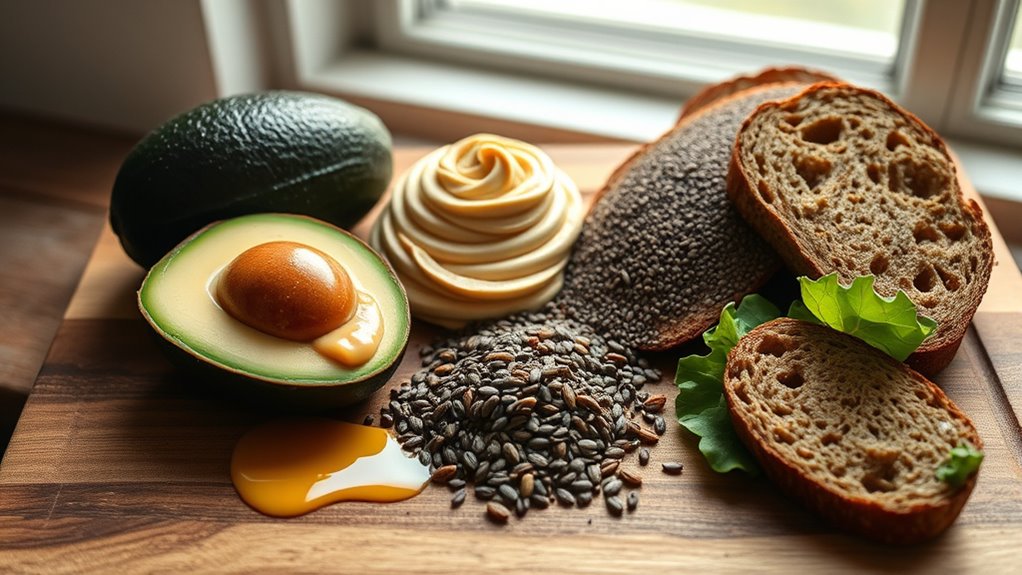
What happens when fats and fiber team up? You’ll notice that pairing these nutrients changes how you feel after meals and how your body handles nutrients over a few hours. In practice, it isn’t just about labeling foods as “fats” or “fiber.” It’s about how fat synergy interacts with fiber to influence digestion, absorption, and satiety. You get a clearer sense of fullness, a steadier energy curve, and less of a post-meal crash, especially when you’re mindful of what you eat alongside fats and fiber.
When you eat fats with fiber, you slow gastric emptying and blunt spikes in blood sugar. This isn’t magic; it’s a predictable pattern rooted in physiology. Fiber, particularly soluble varieties, forms a viscous gel that delays how quickly carbohydrates reach your small intestine. Pair that with fats, which take longer to digest, and you reduce rapid glucose influx. The result isn’t just steadier glucose; it’s better management of appetite signals. You’re more likely to feel satisfied longer, which can help curb overeating later in the day.
When fats meet fiber, digestion slows and blood sugar stabilizes, boosting fullness.
The key idea behind fat synergy is that fats don’t act in isolation. They influence the hormonal and neural cues that tell you you’re full. When fat and fiber are present, you extend the time nutrients are exposed to your gut lining, which can alter the release of satiety hormones. You may experience a gentler rise in insulin, not a sharp spike. This has implications if you’re trying to balance energy intake across meals or optimize endurance through a day of activities. It isn’t about a single meal; it’s about cumulative effects across meals when you consistently pair fats and fiber thoughtfully.
Fiber timing matters, too. If you’re aiming to maximize satiety and stabilize post-meal energy, consider when you consume fiber relative to fats. Consuming soluble fiber with fat-containing foods can amplify the slowing effect on gastric emptying, while insoluble fiber mainly adds volume and stool bulking. The practical takeaway is simple: you don’t need to chase mega-dose fiber or fat in every bite. Instead, you shape meals so that fiber-rich portions accompany moderate healthy fats. This approach supports a smoother digestion process and a more reliable sense of fullness.
In terms of evidence, a range of studies shows that combining fat with fiber can blunt blood sugar responses and enhance fullness compared with high-carbohydrate meals alone. You don’t need to overthink individual components to reap benefits; just keep a balanced plate with plant-based fibers and quality fats. To apply this regularly, you could start with meals that pair avocado or olive oil with legumes, or add flaxseed to yogurt or oats. Small, consistent adjustments build the right pattern over weeks, reinforcing fat synergy and mindful fiber timing without complicating your day.
Common Questions
How Do Fats Affect Fiber’s Digestion Pace?
Fats slow down fiber digestion. You’ll notice steadier stomach pacing and longer satiety, not wild rollercoaster bursts. When fats digestion accompanies fiber, your gut processes things more gradually, reducing spikes in glucose and easing transit. You’ll benefit from improved fiber absorption as nutrients linger longer in contact with your gut lining. This isn’t magic, it’s physiology: fats fatten the ride, while fiber tunes the speed, creating a steadier, evidence-based digestive rhythm.
Can Fats Improve Fiber Absorption in Meals?
Yes, fats can influence fiber absorption. You may notice slower stomach emptying and extended nutrient exposure, which can help with certain fibers. In contrast, fat can also hinder quick absorption of some minerals, so the net effect depends on fiber type and meal composition. You’ll want to monitor portions. Overall, fat absorption can be impacted, and fiber solubility often improves when fats are present, supporting gradual digestion rather than rapid transit.
Do Different Fats Pair Better With Soluble vs. Insoluble Fiber?
Yes, some fats pair better with soluble fiber than with insoluble fiber, subtly slowing digestion to support fat‑assisted absorption. You’ll notice that pairing fats with soluble fiber can smooth digestion pace, while insoluble fiber stays more about bulk. When you choose fats, you’re not just adding energy—you’re influencing how your body handles soluble fiber vs. fats. Overall, pairing fats with soluble fiber supports controlled digestion and absorption.
What Are Quick Fat-Fiber Snack Ideas?
Quick snacks include almonds with a piece of fruit, yogurt with a drizzle of olive oil, avocado on whole-grain crackers, or cottage cheese with chia seeds. These fat pairing options help you feel fuller and can slow carbohydrate absorption. Keep portions in check and pair fiber-rich foods with a small amount of healthy fat. You’ll get steady energy, and this evidence-based approach supports balanced blood sugar during busy days.
Are There Fiber-Rich Foods That Hinder Fat Absorption?
Some say fiber-rich foods hinder fat absorption, but evidence isn’t that simple. You’ll notice minimal impact when you pair fiber with meals thoughtfully, thanks to fiber’s “fiber synergy”—slowing digestion but not blocking fats. Real shifts come with meal timings and portion choices. You may benefit by pairing fats and fiber in balanced amounts, spreading intake through the day, and monitoring how your body responds. Stay evidence-based, and adjust to what your gut tolerates.