
For example, you grab yogurt with berries and nuts and feel steady energy for hours. You’ll often reach for high-satiety pairings—protein, fiber, and healthy fats—to curb cravings during busy days. Think yogurt with probiotics, whole grains with hummus and cucumber, and cheese with a few almonds to slow digestion. These choices support simple mornings, balanced lunches, and light evening snacks, keeping focus intact as schedules tighten. Keep exploring to tailor these ideas to your routine.
Key Points
- Yogurt with berries and nuts provides calcium, probiotics, protein, and fiber for lasting fullness during busy days.
- Whole-grain crackers with hummus and cucumber offer complex carbs, plant protein, and hydration with minimal prep.
- Almonds paired with a slice of cheese combine fat and protein to slow digestion and curb appetite.
- Overnight oats with chia seeds and high-protein smoothies with spinach and Greek yogurt set a fiber- and protein-rich morning tone.
- Lean-lunch ideas (protein + vegetables + whole grains or legumes) sustain energy through the afternoon and reduce mid-day hunger.
When your schedule is packed, choosing foods that keep you full longer isn’t a luxury—it’s a productivity strategy. You’re balancing back-to-back meetings, deadlines, and mental tasks, so sustaining energy with high-satiety options matters. Think of meals and snacks as fuel that steadies glucose, reduces cravings, and supports focus. You don’t need gourmet choices to make an impact—just practical, evidence-informed picks built around fiber, protein, and healthy fats.
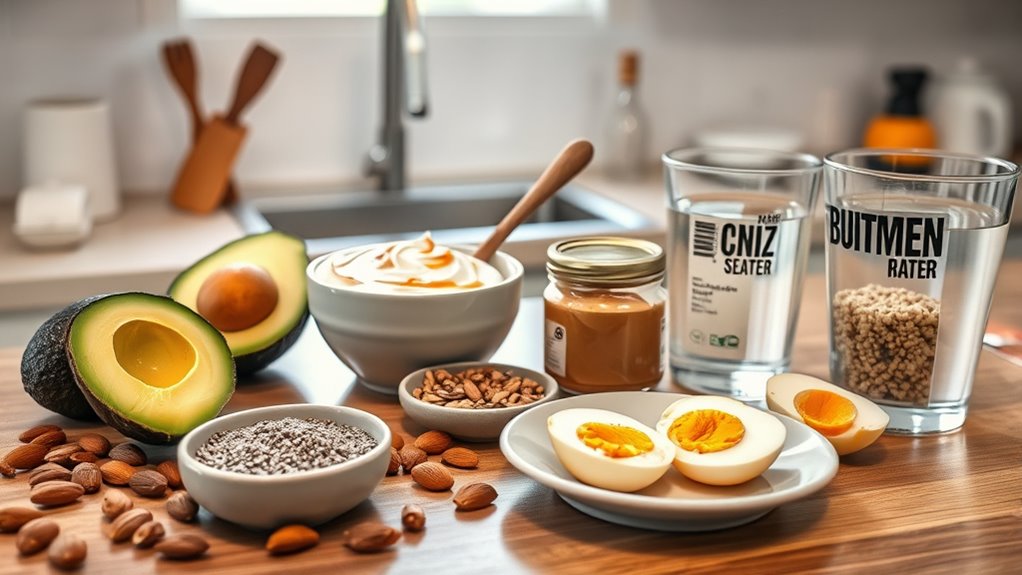
Healthy snacks can bridge long stretches between meals without derailing your day. Pairing protein with fiber is especially effective for fullness and stable energy. A simple option is yogurt with berries and a sprinkle of nuts, which provides calcium, probiotic benefits, and a mix of micronutrients along with satiety. If you prefer savory, whole-grain crackers with hummus and cucumber slices deliver complex carbohydrates, plant-based protein, and hydration from vegetables. For portable crunch, opt for almonds or walnut halves with a slice of cheese or a hard-boiled egg; the combination supplies fat and protein that slow digestion and curb appetite until your next scheduled meal. Remember to portion mindfully, because even healthy snacks can accumulate calories if left unchecked.
Healthy snacks pair protein with fiber to boost fullness and steady energy.
Meal timing plays a critical role in how full you feel across the day. Consistent eating intervals help stabilize appetite signals and prevent overeating during the next feeding window. If your mornings are hectic, a prepared, fiber-rich breakfast like overnight oats with chia seeds, or a high-protein smoothie with spinach, Greek yogurt, and flaxseed, can set a steady tone. As you move through late morning or early afternoon, a balanced lunch that emphasizes lean protein, vegetables, and a whole grain or legume source supports sustained energy. If you work late, a light, protein-forward snack after dinner can blunt nocturnal hunger and reduce late-night grazing. The key is to align meals and snacks with your natural rhythms, so you’re rarely operating with an energy deficit that triggers impulsive choices.
In practice, build a toolkit of reliable options you enjoy and can prepare quickly. Favor whole foods over highly processed substitutes, because they tend to deliver more satiety per calorie and better overall nutrient quality. Hydration matters too; sometimes thirst masquerades as appetite, so keep water or unsweetened beverages nearby. Track how different foods influence your focus and mood, then adjust your selections to maintain steady cognitive function throughout busy periods. By prioritizing healthy snacks and deliberate meal timing, you’ll reduce fluctuations in hunger, support consistent performance, and navigate demanding days with greater ease.
Common Questions
How Do High-Satiety Foods Help Energy on Busy Days?
High-satiety foods help energy on busy days by stabilizing blood sugar and curbing cravings. For instance, a study shows high-protein, high-fiber meals reduce subsequent hunger by 20–30%, supporting steadier energy. You’ll maintain energy as you avoid spikes and crashes. This reflects high satiety science, guiding choices that sustain focus. You’ll feel more alert and prepared. Energy maintenance comes from balanced macros, fiber, and slow-dasting carbs, so you stay productive between meals.
Can These Foods Aid Weight Loss Without Exercise?
Yes, these foods can aid weight loss without exercise, mainly through calorie balance and stronger satiety signals. When you choose high-satiety options, you may eat fewer calories overall, support steady energy, and reduce snack cravings. Focus on protein, fiber, and volume, plus mindful portions. Remember, gradual, sustainable changes beat quick fixes. Track intake, not perfection. If you’re unsure, consult a clinician.
Are High-Satiety Options Suitable for Vegetarians?
Yes, high-satiety options are suitable for vegetarians. You can meet protein needs with vegetarian protein sources, like beans, lentils, tofu, tempeh, seitan, and quinoa, which support Plant based satisfaction. Pair these with fiber-rich veggies and whole grains for volume and fullness. Aim for a variety to cover amino acids, iron, and B12. Track portions, hydration, and satiety cues to stay energized and avoid excessive snacking.
Which Easy-Prep Meals Maximize Fullness Quickly?
Short answer: easy prep meals maximize fullness quick when you build protein, fiber, and volume into simple combos. You’ll want overnight oats with chia, Greek yogurt bowls, lentil or bean soups, veggie-rich burritos, and quick tofu scramble with quinoa. Pace matters: pair carbs with protein, add greens, and select high-water veggies. You’ll feel fuller longer, you’ll eat fewer snacks, and you’ll recover energy fast—proof that easy prep meals can deliver fullness quick with steady results.
Do They Affect Blood Sugar Stability Long-Term?
Yes—long-term, they can support blood sugar stability. By improving fiber intake, you slow glucose absorption and boost fullness, which aids blood sugar management over time. Consistently pairing high-satiety foods with balanced protein and healthy fats helps avoid spikes. Monitor portions, choose whole grains, legumes, vegetables, and nuts, and stay hydrated. Regular activity further stabilizes levels. If you have concerns, consult a clinician for personalized guidance on fiber intake and blood sugar management.