
You may not realize how much volume, not just calories, matters for fullness. When you eat water-rich vegetables, fruits, legumes, and lean proteins, your stomach stretches and signals fullness longer than a calorie-only approach. This slows gastric emptying and dampens between-meal cravings. By structuring meals around bulk, you get steady appetite control with comfortable satisfaction, making daily energy targets easier to hit. Curious how small plate changes can add up?
Key Points
- High-volume foods physically stretch the stomach, triggering fullness signals without adding many calories.
- Water, fiber, and air-rich foods increase volume, delaying hunger and supporting steady daily intake.
- Greater meal volume lowers short-term hunger ratings and subsequent energy intake.
- Volume-driven satiety comes from gastric distension and slower gastric emptying, not just calories.
- Building meals around vegetables and fruits with lean proteins provides bulk to curb cravings and support adherence.
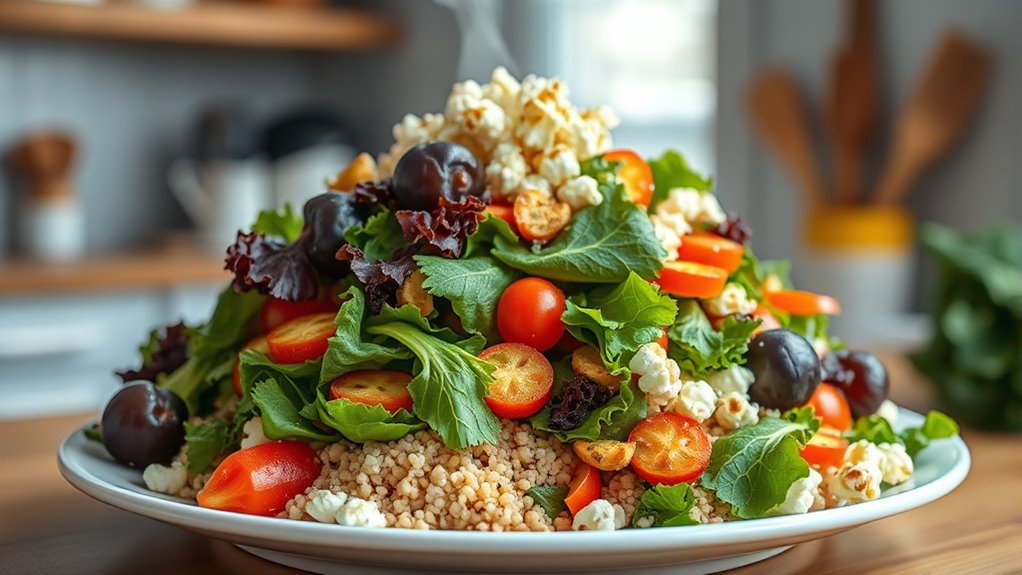
Have you ever wondered how some foods curb hunger more effectively than others, even when their calorie counts are similar? The answer lies in how the foods fill space in your stomach relative to their energy content. High-volume foods have a low energy density, meaning you can eat a larger portion with fewer calories. This physical fullness tends to delay the return of sensations that signal hunger, supporting hunger management without increasing caloric intake. You can leverage this by prioritizing foods that provide substantial bulk—think vegetables, fruits with high water content, soups with a light broth, and these items paired with lean proteins.
High-volume, low-density foods curb hunger by filling space with fewer calories.
When you assess appetite control, volume matters because stomach stretch activates mechanoreceptors that convey fullness to your brain. This response is not only about calories but also about how much you eat in a sitting. High-volume options make it easier to reach a threshold where you feel satisfied while still maintaining a moderate energy intake. In practice, you’ll notice that you can consume a satisfying portion of a low-energy-dense meal and still have energy available for later activities. This pattern supports sustainable hunger management over the course of a day.
In empirical terms, studies show that meals with greater volume—without a proportional increase in calories—tend to reduce short-term hunger ratings and subsequent energy intake. The mechanism involves gastric distension and the rate of gastric emptying, which influence satiety signals. By choosing foods that contribute volume through water, air, or fibrous content, you prolong the sensation of fullness. You don’t need to sacrifice taste or variety to achieve this; you can structure meals around produce, legumes, lean meats, and whole grains that deliver both nutrients and bulk.
To apply this, plan plates that emphasize vegetables and fruits as the foundation, then add lean protein and modest portions of whole grains or starchy accompaniments. The goal is to maximize volume while keeping calories in check. For instance, a large vegetable-forward salad with legumes, paired with a modest portion of chicken, can offer substantial fullness. A home-cooked stew or soup with vegetables, beans, and a lean protein source also delivers high-volume, low-density benefits. Hydration contributes to perceived fullness, so include water-rich foods and fluids alongside solid portions.
Remember that high-volume eating isn’t about overeating; it’s about optimizing meal structure for hunger management. You’ll likely experience steadier appetite signals, reduced cravings between meals, and better adherence to daily energy targets. By prioritizing high-volume foods, you create a practical approach to satiety that aligns with precision nutrition principles. If you track portions and listen to body cues, you’ll refine your intake patterns toward consistent fullness without excess calories.
Common Questions
Do High-Volume Foods Affect Blood Sugar Differently Than Low-Volume Foods?
Yes, high-volume foods do affect blood sugar differently than low-volume foods. You might be surprised to learn that consuming foods with low energy density can slow glucose rise, while high-volume, fiber-rich options keep you fuller longer. In studies, meals with the same calories but greater volume often produce steadier blood sugar curves. You’ll notice slower post-meal spikes, more sustained energy, and better appetite control when you prioritize high-volume choices in your plate.
Can High-Volume Foods Be Part of a Weight Loss Plan?
Yes, high-volume foods can be part of a weight loss plan. They let you eat more volume with relatively fewer calories, improving satiety and adherence. You’ll likely lower overall energy density, supporting weight loss feasibility. Track portions and choose fiber-rich, water-dense options. Prefer vegetables, soups, and fruits while moderating high-sugar items. You’ll maintain variety and nutritional balance, making consistent calorie control easier and sustainable.
Which Everyday Foods Count as High-Volume yet Low-Calorie?
Yes: everyday foods that count as high-volume yet low-calorie include leafy greens, cucumbers, tomatoes, celery, zucchini, mushrooms, berries, watermelon, citrus fruits, broth-based soups, air-popped popcorn, and plain yogurt with fruit. You’ll feel fuller because of volume per bite. Track daily portions to maintain balance, aiming for substantial portions without excess calories. You’ll notice you’re less hungry between meals, supporting steady intake. High volume, low calorie foods support your portion control and daily portions goals.
How Do Fiber and Water Content Influence Satiety?
Fiber and water content influence satiety by expanding volume in your stomach, signaling fullness sooner and sustaining it longer. You’ll feel less hungry after meals because higher fiber density slows digestion, while greater water content adds bulk without calories. This empirical pattern means choosing foods with elevated fiber density and ample water helps regulate appetite, stabilize energy, and reduce intake over several hours, aligning your eating with natural fullness cues rather than external cues.
Are There Potential Drawbacks to Relying on High-Volume Foods?
Yes, there are drawbacks to relying on high-volume foods. You may experience satiety mismatch, where you feel full initially but cravings return sooner than expected. Cost barriers can also limit sustainable use, since these options aren’t always affordable or accessible. Additionally, relying too much on volume can lead to overconsumption if portions aren’t monitored. Overall, balance, variety, and mindful shopping help mitigate these drawbacks while preserving satiety and nutrition.