
You’ll find that slow evenings reduce arousal and smooth the shift from work to leisure, cutting the intensity of cravings. By lowering decision fatigue and stabilizing your routine, you’re less driven by unpredictable cues and stress responses. Environmental tweaks—dim lights, fewer screens, quieter notifications—limit exposure to triggers. Pair that with a simple wind‑down and a non-caloric drink, and cravings lose momentum, but the key nuance you’ll want to test tonight isn’t obvious at first.
Key Points
- Slower evenings reduce arousal and stress, dampening craving signals from cues, emotions, and thoughts.
- Stable, low-variance routines curb decision fatigue and impulsivity, supporting craving resistance.
- A 60–90 minute wind-down lowers cognitive load, limiting hedonic triggers that drive cravings.
- Environment and reduced stimulation (dim lights, limited screens) lessen cue exposure and autonomic activation.
- Consistent routines strengthen self-regulation and provide empirical, gradual craving reduction over time.
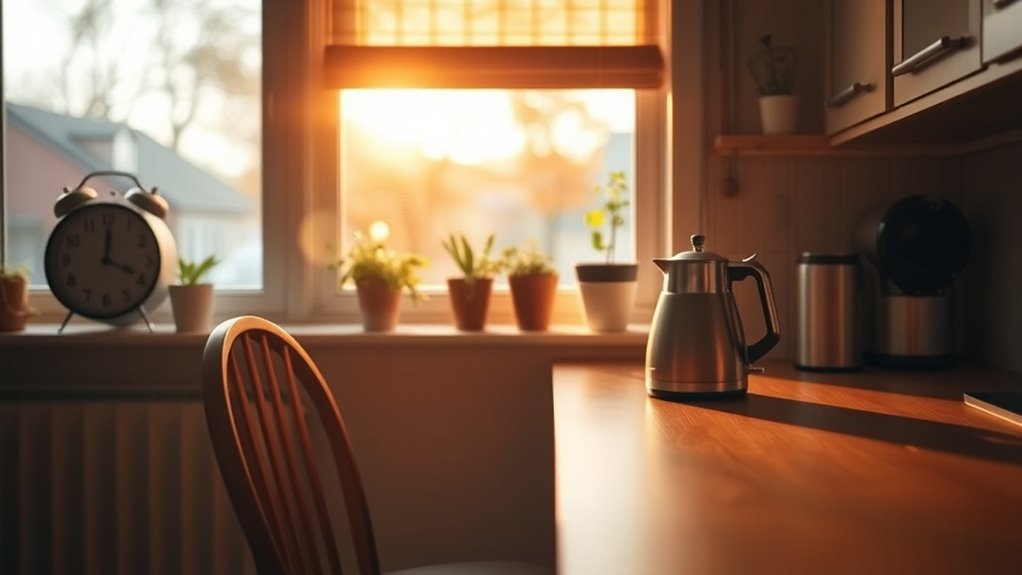
Is slowing the pace of your evenings a simple lever for reducing cravings? In clinical terms, the connection between arousal, stress, and craving intensity is well documented, and your evening environment is a primary moderator. You’re not merely passive in this process—you actively shape signals that propagate or dampen urges. Craving psychology emphasizes how cues, emotions, and thought patterns interact to intensify or lessen desires. By adjusting timing, sensory input, and social context, you alter the likelihood of engaging in compulsive eating, snacking, or substance-use behaviors after sundown. Your aim is to create a predictable, low-variance emotional tone as you transition from work to leisure.
Slowing evening pace lowers arousal, shaping cravings through environment, cues, and routine.
Your evening routines matter because they set the baseline for self-regulation during the hours when temptation often peaks. A stable routine reduces decision fatigue, a key resource the brain relies on to resist cravings. When you script a calm sequence—turning off work notifications, preparing a light, balanced snack, and scheduling a short, nonstimulating wind-down—you provide your system with a reliable rhythm. This predictability curbs impulsive responses that arise from surprise or novelty, factors strongly linked to craving intensity. Clinically, consistent routines support autonomic balance, lowering sympathetic activation that can amplify urges.
To implement, map a 60- to 90-minute window before bed that focuses on sensory de-arousal and cognitive containment. Prioritize activities with low cognitive load and minimal hedonic triggers: light stretching, gentle breathing, a brief reflective practice, or a soothing, non-caloric beverage. Avoid high-reward stimuli such as binge-worthy media, highly rewarding snacks, or caffeine late in the day, as these amplify craving signals by reinforcing dopamine pathways. In your practice, note that cravings often follow predictable patterns; identifying these windows helps you preempt a spike rather than battling it in the moment.
Environmentally, reduce cue exposure that triggers craving psychology. Dim lights, limit screen exposure, and remove tempting foods from sight or access. If you use electronic devices, choose modes that block alerts or reduce blue light, which can disrupt melatonin and heighten reactivity to cravings. Socially, communicate boundaries to household members so your evening stays aligned with your goals. A supportive social context reinforces your self-regulation, making it easier to sustain the routine across nights.
Measurement and feedback are essential. Track days when you maintain your evening routine versus when you skip it, and correlate with craving strength reports or snacking episodes. Over time, you’ll see a pattern: slower evenings associate with fewer intense cravings and fewer impulsive decisions. Your goal isn’t perfection, but a consistent, empirically grounded approach that leverages routine to modulate craving physiology. With practice, you’ll feel more control as the evening unfolds.
Common Questions
How Do Slow Evenings Reduce Nighttime Cravings Effectively?
A calm evening is the anchor that reduces nighttime cravings. You’ll notice fewer cravings when you pause and follow mindful evenings, limiting exposure to craving cues. Your evening routines regulate hormone fluctuations, supporting steadier urges. By identifying craving cues early, you can intervene with structured activities, light meals, and sleep prioritization. This empirically grounded approach helps you break cycles, lowering intensity and frequency of urges as you move toward consistent, healthier choices.
Can Slow Evenings Help With Overall Daily Impulse Control?
Yes, slow evenings can support your overall impulse control. By extending calming routines into daily life, you reduce stress reactivity and improve decision-making under fatigue. Structuring evenings to limit quick rewards lowers temptation, allowing better adherence to long-term goals. You’ll notice enhanced self-regulation across daytime tasks as neurocognitive effort remains steadier. Implement consistent wind-down activities, mindful breaks, and predictable schedules to reinforce these gains in impulse control beyond night hours.
What Activities Best Replace Snacking During Slow Evenings?
You can replace snacking with purposeful activities like reading rituals and mindful stretching. You’ll feel a suspenseful shift as you choose calmer actions over craving-driven urges. Reading rituals engage your attention and reduce automatic snacking, while mindful stretching supplies somatic relief, lowering tension and impulse intensity. Clinically, these activities support executive control, helping you pause before responding. You’ll build consistency by prioritizing these strategies during slow evenings, reinforcing healthier self-regulation and reducing relapse risk.
Do Slow Evenings Work for All Types of Cravings?
Slow evenings can help some craving types, but not all. You’ll likely see greater benefit for urges tied to routine boredom or emotion-driven cravings, while physiological or highly addictive cravings may be less responsive. The approach works best when paired with structured activities, mindful awareness, and relapse-prevention strategies. If a craving persists across types, you may need additional supports. Monitor patterns, adjust timing, and personalize the plan to your craving types for steady relief.
How Long Before Results Appear From Practicing Slow Evenings?
Results appear gradually, typically within 2 to 6 weeks of consistent practice. You’ll notice fewer craving spikes, improved emotional regulation, and greater self-control during evenings. How long before varies by, for example, baseline stress, sleep quality, and adherence. If you continue with deliberate pacing, you may observe incremental benefits week by week. Track your cravings and mood, acknowledging small shifts as evidence you’re progressing. Stay consistent and reassess after a few weeks.