
You might not realize how much your hunger can hinge on fiber in your grains. Whole grains slow digestion and steady blood sugar, so you feel fuller longer after meals. The mix of soluble and insoluble fiber adds bulk without extra calories, while delaying stomach emptying. Pairing grains with protein and healthy fats can further blunt cravings between bites. Curious how swapping refined for whole grains could reshape your daily energy pattern? Here’s why it works.
Key Points
- Whole grains slow glucose release due to higher fiber, reducing quick hunger after meals.
- Fiber adds bulk and absorbs water, prolonging digestion and keeping you fuller longer.
- Steadier blood sugar avoids spike-and-crash hunger cycles that refined grains can trigger.
- Pairing grains with protein and healthy fats reinforces fullness signals and appetite pacing.
- Intact grains act as anchors in meals, creating consistent energy levels and fewer cravings between meals.
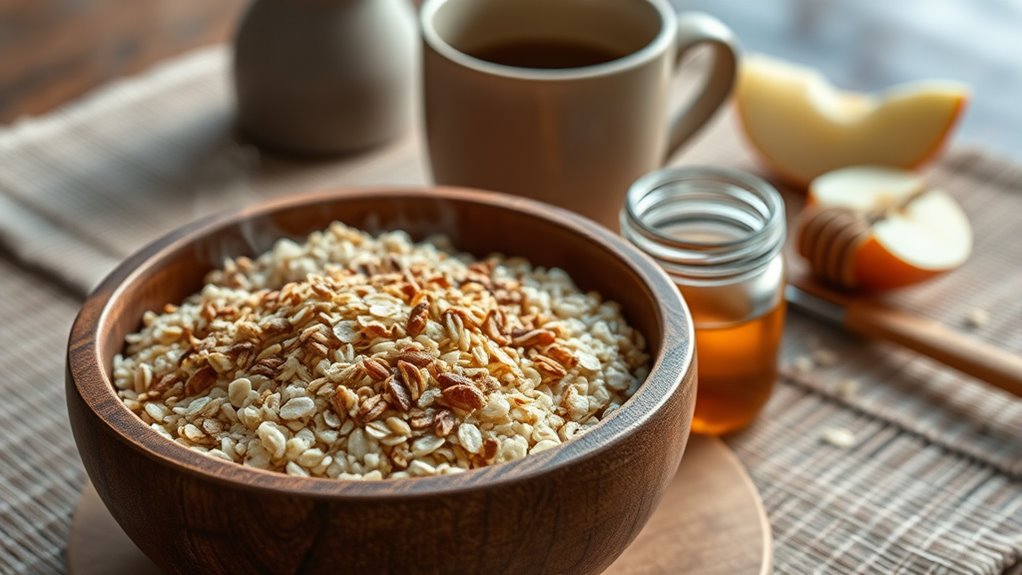
Whole grains can be a simple, evidence-backed way to curb hunger and steady your energy throughout the day. You’ll notice how choosing whole grains instead of refined staples helps you feel fuller for longer, without needing constant snacks. The science isn’t about magic; it’s about how your body processes carbs and how your brain interprets signals of fullness. When you eat whole grains, you’re getting more fiber, more nutrients, and a slower release of glucose. That combination can blunt sharp hunger cues and support more stable energy.
Whole grains steady energy by boosting fiber, slowing glucose, and calming hunger signals.
One key idea is satiety signals. After a meal, your gut sends messages to your brain about how full you are. Whole grains contribute to these signals in several ways. Their fiber content slows digestion, extending the time it takes for carbohydrates to enter your bloodstream. That gentler rise in blood sugar helps you avoid the quick spike-and-crash pattern that often triggers hunger soon after eating. You may notice you don’t feel the need to reach for a snack as quickly as you would after a meal centered on refined grains. This isn’t just feeling full; it’s a calibration of appetite that keeps you on track between meals.
Fiber buffering is another crucial concept. The soluble and insoluble fibers in whole grains absorb water and add bulk in your gut. This bulk adds volume to your meals without a lot of extra calories, helping you feel satisfied with fewer calories overall. The buffering effect also moderates how quickly your stomach empties, contributing to a steadier sense of fullness. As you build meals around whole grains, you’re leveraging this buffering to stretch the time between bites, supporting longer stretches of appetite pacing rather than reactive snacking.
Appetite pacing matters, especially when you’re juggling work, errands, and a busy schedule. When you include whole grains, you’re setting a steady rhythm for your day. Your meals become anchors that help you plan for energy surges and dips. By pairing whole grains with protein and healthy fats, you can reinforce the fullness signal and sustain energy for longer periods. Think of breakfast bowls, whole-grain wraps, or a hearty brown-rice or quinoa-based lunch as tools to pace your day. You’ll likely experience fewer cravings between meals and a more predictable appetite pattern, which supports consistent eating habits.
In practice, choose intact or minimally processed grains: oats, barley, farro, quinoa, bulgur, brown rice, and whole-wheat options. Combine them with fiber-rich vegetables and a protein source to maximize satiety signaling. If you’re new to this approach, start by swapping refined grains in one meal per day and observe how your energy and hunger respond. Over time, you’ll likely notice that Whole grains, satiety signals; Fiber buffering, appetite pacing become reliable partners in keeping hunger under control.
Common Questions
Do All Whole Grains Affect Hunger the Same Way?
You’ll notice no, not all whole grain varieties affect hunger the same way. In fact, some studies show your satiety can vary by type and fiber content. For example, higher-fiber options tend to boost fullness more quickly than lower-fiber ones. So yes, satiety differences exist across whole grain varieties, and choosing diverse, fiber-rich grains can help you manage appetite more effectively.
How Much Fiber Is Needed to Curb Hunger?
You’ll likely need about 25–38 grams of fiber daily to curb hunger, though individual needs vary. Start with 25 grams and adjust based on your tolerance and fullness signals. In terms of amount per meal, aim for a portion that gives about 5–8 grams of fiber each, spreading it across meals. Be mindful of fiber myths and prioritize gradual increases. Pair fiber with proteins, and mind portion sizing to sustain appetite control.
Can Gluten-Free Grains Help With Appetite Control?
Yes, gluten-free grains can help with appetite control. You’ll likely notice steadier energy and fewer rapid cravings when you choose naturally gluten-free options like quinoa, oats labeled gluten-free, and brown rice, which provide fiber and protein. However, focus on balanced portions and pairing with protein and healthy fats. If you’re aiming for gluten free appetite management, track how grain free hunger changes as you vary portions and include non-grain fiber sources.
Do Processed vs. Intact Grains Differ in Fullness Impact?
Processed vs. intact grains differ in fullness impact, but all whole grains promote steady hunger response. Picture a pebble turning into dust: intact grains release energy slowly, keeping you fuller longer; processed grains crumble quickly, sparking shorter-lasting fullness. You’ll notice that your appetite signals calm with intact grains, while ultra-processed options may prompt quicker hunger returns. Choose all whole grains to support lasting fullness and consistent hunger management, based on evidence.
Are There Timing Tips for Meals With Whole Grains?
Yes—focus on meal timing with whole grains to manage hunger cues. You’ll benefit from steady, balanced meals every 3–4 hours, pairing whole grains with protein, fiber, and healthy fats. Start with a larger breakfast, include a midday whole-grain option, and avoid long gaps between meals. Listen to hunger cues, not cravings, and adjust portions accordingly. Consistent timing supports appetite regulation, reduces overeating, and keeps energy stable between snacks and main meals.