
If you’re looking for gut-supportive meals, this easy guide can help you plan with small, steady steps: focus on nutrient-dense proteins, a variety of fiber-rich foods, and fermented or probiotic-friendly components, while tuning portions to what feels sustainable for you. Start by choosing digestible proteins you tolerate, layer in non-starchy veggies and a modest healthy starch, and add a touch of fermented foods. You’ll discover practical tweaks that fit your routine—and the next step might be closer than you think.
Key Points
- Build meals around nutrient-dense proteins, diverse fiber sources, and fermented or probiotic-friendly components for gut support.
- Choose digestible proteins (eggs, poultry, fish) and pair with non-starchy veggies and a modest healthy starch.
- Include fermented foods regularly (sauerkraut, kimchi, pickles) and start with small portions to build tolerance.
- Prioritize steady, gradual fiber increases from whole grains, fruits, vegetables, legumes (if tolerated), nuts, and seeds.
- Use probiotics thoughtfully (yogurt/kefir if tolerated) and tailor plans to preferences, tolerances, and daily schedules.
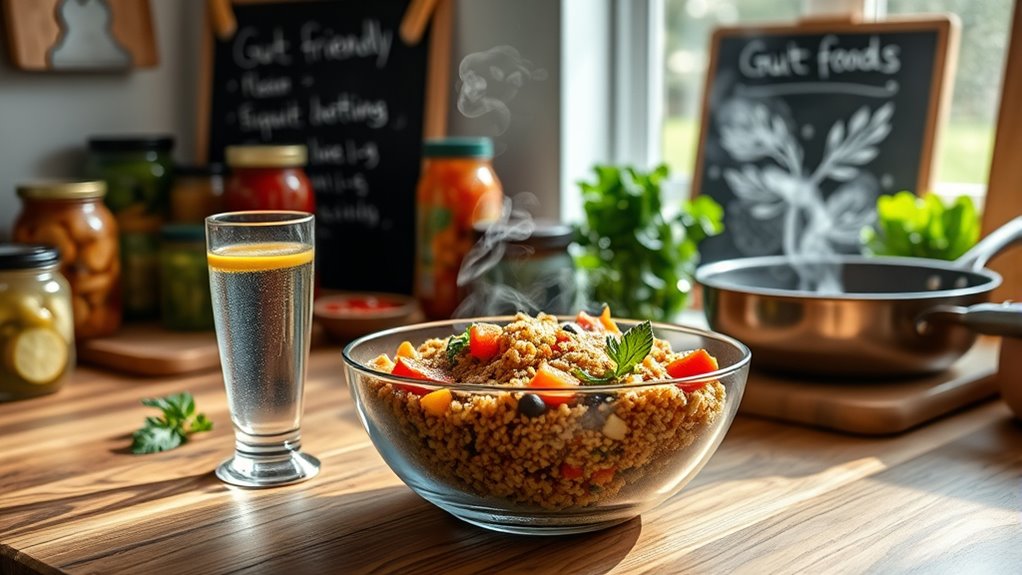
Wondering what meals can actually support gut health? You’re here because you want practical, doable steps that fit into real life, not hype. In this guide, you’ll learn how to assemble gut-supportive meals with a focus on evidence-informed choices, patient-centered planning, and clear targets you can actually hit. Start with the idea that consistency matters more than perfection: small daily patterns accumulate over weeks and months, shaping digestion, energy, and overall well-being. To begin, think in terms of three pillars: nutrient-dense proteins, fiber from diverse sources, and fermented or probiotic-friendly components that align with your preferences and tolerance. This isn’t about rigid rules; it’s about sustainable tweaks you can maintain.
Consistency over perfection: small, gut-friendly daily tweaks add up.
When it comes to protein, aim for digestible proteins that won’t overwhelm your gut while still supplying essential amino acids. Think gently cooked chicken, turkey, fish, eggs, or plant-forward options like lentils or tempeh if you tolerate them well. Pair proteins with non-starchy vegetables and a modest portion of healthy starch to support satiety and steady energy. If you drink dairy, consider yogurt or kefir with no added sugar, which can contribute to gut-friendly bacteria for some people. You’ll notice that the focus is on how you feel after meals as much as what the plate looks like. If you notice bloating or discomfort, adjust portion sizes and preparation methods (more cooking, less raw, smaller bites) rather than abandoning a protein source you enjoy.
Incorporate Fermented veggies regularly in a form you’ll actually eat. Fermented veggies offer potential probiotic benefits and flavor variety that can support diverse gut microbes. Add a side of sauerkraut, kimchi, or pickled vegetables a few times per week, or include a fermented topping on salads and bowls. If those items aren’t appealing, try a small serving with a familiar dish to build tolerance gradually. The goal isn’t deprivation; it’s gently expanding the palate and weekly routine so your gut has more microbial diversity to work with.
Fiber myths can derail good plans if you chase extremes. You don’t need to hit a dramatic daily target to support gut health. Instead, prioritize a steady, gradual increase in fiber from a variety of sources: whole grains, legumes if tolerated, fruits, vegetables, nuts, and seeds. Spread fiber intake across meals to reduce symptoms and improve stool consistency. Listen to your body and adjust types and amounts based on how quickly you respond.
Probiotic foods can be helpful anchors for some people, but they aren’t a magic solution. If you enjoy yogurt, kefir, or cultured cheeses, include them in moderation and observe effects on digestion. If you’re dairy-averse, explore non-dairy probiotic options or focus on fermented veggies and high-fiber foods while keeping expectations realistic. Your plan should reflect your preferences, tolerances, and daily schedule, making gut-supportive meals feel accessible, practical, and sustainable over time.
Common Questions
How Soon Will I Notice Gut Changes After Meals?
Sure—you’ll often notice meal-based changes within 24 to 72 hours, though some effects can take a few days to a couple of weeks, depending on your gut baseline. Acknowledge noticing timeline shifts, track symptoms, and adjust portions or fiber gradually. An anachronism at the start: “back in 2020, I’d…” You’ll stay evidence-based, practical, and client-centered, focusing on consistent meal patterns, hydration, and gradual fiber increases to support steady, sustainable gut improvements.
Can Gut-Supportive Meals Aid Autoimmune Conditions?
Yes, gut-supportive meals can help some autoimmune conditions by reducing inflammation and supporting mucosal health. You may notice subtle improvements in symptoms with consistent, balanced meals and fiber-rich choices. Are probiotic supplements necessary with these meals? Not always; focus on whole foods first, then consider evidence-based probiotics if symptoms persist. Track your responses, personalize portions, and discuss any changes with your clinician to optimize your plan.
Are Probiotic Supplements Necessary With These Meals?
No, probiotic supplementation isn’t strictly necessary for gut-supportive meals. You can still benefit by focusing on diverse, fiber-rich foods and fermented options. If you choose supplements, start with a low dose and monitor symptoms. Consider including probiotic supplementation only if a clinician recommends it. Also mix in gut friendly beverages, like kefir or naturally fermented drinks, to support microbial diversity. Plan gradually, track responses, and adjust based on personal tolerance and goals.
How Do I Batch-Cook Gut-Friendly Dishes?
Batch cooking gut-friendly dishes starts with a plan, like seeds sprouting into steady food. You’ll prep in batches, store in labeled containers, and reheat safely. For evidence-based, client-centered tips: use batch cooking tips, keep fiber-rich veggies and lean proteins, and balance sauces to avoid gut irritants. Pantry organization ideas keep staples accessible. Schedule one marathon cook day, then freeze portions for quick meals, portion control, and consistent gut support.
Which Spices Irritate or Soothe the Gut?
Spices that irritate your gut include chili peppers, garlic, and strong peppers; some people tolerate them poorly. Spices that soothe your gut often involve ginger, turmeric, and cumin in moderate amounts. You may find fennel, coriander, and cardamom gentler. If you notice symptoms, scale back and reintroduce one spice at a time. Track what you eat, listen to your body, and adjust portions to support your comfort and digestion.