
The balanced plate layout is a practical way to steady energy and cover your nutrient bases without counting every crumb. Picture half your plate filled with vegetables and fruit, a quarter with lean protein, and a quarter with whole grains or starchy veg, plus a small amount of healthy fats. It adapts to activity and meals, supports satiety, and reduces decision fatigue. It travels well too, but there’s more to fine-tune for your goals and routine.
Key Points
- Fill half your plate with vegetables and fruit for volume, fiber, and micronutrients.
- Put a quarter of the plate with lean protein to support satiety and repair.
- Reserve a quarter for whole grains or starchy vegetables for sustained energy.
- Include a small amount of healthy fats to aid satiety and nutrient absorption.
- Adjust portions by activity and signals using simple cues (fist for protein, cupped hand for carbs).
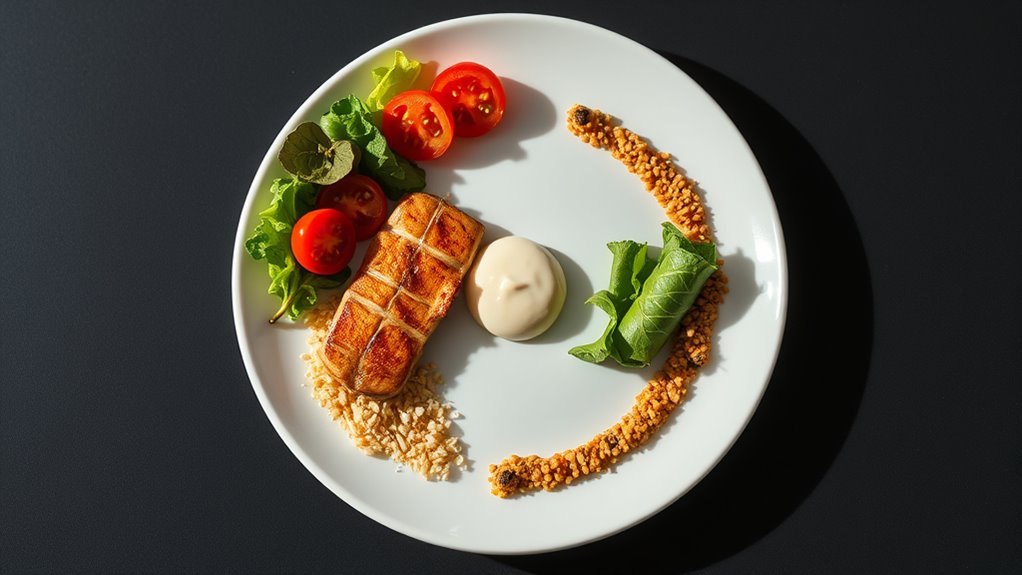
A balanced plate layout is a simple, evidence-based guide to portioning meals for steady energy and nutrient intake. You’ll see how quick, practical steps create reliable meals you can rely on, day after day. The idea is simple: fill half your plate with vegetables and fruit, a quarter with lean protein, and a quarter with whole grains or starchy vegetables, plus a small amount of healthy fats. This balanced plate approach isn’t a rigid rule; it’s a flexible framework that adapts to your preferences, your schedule, and your energy needs. When you think in terms of portion guidance, you remove guesswork and replace it with clear visual cues that support steady blood sugar and sustained focus.
You’ll benefit from starting with produce, because vegetables provide fiber, micronutrients, and volume without excessive calories. Aim for a rainbow of colors to maximize nutrient variety, and choose produce you’ll actually eat. For protein, select lean options like fish, poultry, legumes, tofu, or eggs, aiming for moderate portions that satisfy hunger without leaving you overfull. Carbohydrate choices matter, too: prioritize whole grains, legumes, or starchy vegetables that release energy gradually, helping you stay attentive through the afternoon slump. Fats should accompany meals in small, purposeful amounts—think olive oil, avocado, nuts, or seeds—since fats support satiety and nutrient absorption.
In practice, you’ll adjust portions according to your activity level, body signals, and goals. If you have intense training or higher energy demands, you’ll increase non-starchy vegetables and add a slightly larger protein or carbohydrate component, while still respecting the plate’s balance. If you’re managing appetite or weight, you’ll fine-tune portion sizes by visualizing the plate and using standard measurements you’re comfortable with, such as a clenched fist for portions of protein or a cupped hand for carbohydrates. The key is consistency with the overall template, not perfection of every meal.
The practical benefit of a balanced plate lies in its transferability. You can apply the same portion guidance at home, work, or when eating out, with minimal calculation. By keeping fats modest and prioritizing fiber-rich foods, you’ll support digestive comfort and metabolic stability. Hydration and a mindful eating pace reinforce the plate approach, helping you recognize fullness cues and avoid overeating.
Whether you’re cooking for yourself or supporting others, this layout provides a dependable rhythm. It reduces meal decision fatigue, supports nutrient variety, and aligns with contemporary nutrition science. Remember, the goal isn’t to chase a perfect macro tally, but to sustain energy, mood, and satisfaction through reliable, evidence-based meal patterns. With practice, your balanced plate becomes second nature, guiding consistent choices and clearer, calmer eating experiences.
Common Questions
How Customizable Is the Plate for Different Diets and Allergies?
Yes, it’s highly customizable. You can tailor a customized plate to fits your allergy considerations, diet preferences, and activity levels, with portion guidance that matches your needs. Include plant based adaptations or omnivore balance as you like, do quick swaps on busy days, and adjust cooking methods to maximize nutrient retention. This approach supports nutrient needs, accommodates multiple allergies, and remains practical, evidence-based, and client-centered for sustained success.
What Portion Sizes Fit Different Age Groups and Activity Levels?
You’ll tailor portion sizes to age, activity levels, and goals, with larger portions for higher activity and smaller ones for rest days. For kids, teens, adults, adjust plates by roughly the palm or fist rule, plus protein and fiber emphasis. Dietary customization matters, so include allergy accommodations and safe substitutes. Use evidence-based portions aligned with guidelines, monitor energy and mood, and adjust over time. Stay practical, client-centered, and transparent about what’s working and what isn’t.
How Can I Adjust the Plate for Plant-Based vs. Omnivore Diets?
You can adjust the plate by increasing plant-based protein portions and fiber-rich veggies, or increasing lean animal protein for omnivore needs. For plant-based vs. omnivore, aim for about half the plate with vegetables, a quarter with protein, and a quarter with whole grains or starchy sides, adjusting fats accordingly. Emphasize plate customization to fit energy needs. Use practical guidance, monitor satiety, and tweak portions. This approach supports evidence-based, client-centered, and flexible meal planning.
Are There Quick Swaps to Maintain Balance During Busy Days?
Yes—try quick swaps like swapping in beans or lentils for meat, or adding a handful of nuts instead of a snack bar, and you’ll keep meal balance on busy days. You’ll feel steadier energy, fewer crashes, and less prep stress. Plan simple combos: protein + fiber + veggies + whole grains, even in small portions. This evidence-based approach fits real life, respects preferences, and stays flexible for whatever your schedule throws at you.
How Does Cooking Method Affect Nutrient Retention on the Plate?
Cooking methods considerably impact nutrient retention on the plate. You’ll keep vitamins and minerals higher when you use steaming, microwaving, or short, gentle cooking times, rather than boiling or long exposures to heat. Pair foods wisely and cut in uniform pieces to shorten cook times. You’ll also preserve nutrients by cooking with minimal water and serving soon after, avoiding reheating. In practice, choose efficient cooking methods and balance energy with fiber-rich sides for steady nutrition.