
Though it may feel like a small adjustment, slowing your eating shifts how you notice fullness. You’ll likely chew more and pause between bites, which can sharpen satiety cues and curb impulsive second servings. Over time, this precision tends to steady energy and reduce post-meal dips, without strict deprivation. If you stay with the pace, you could uncover a clearer link between portion, perception, and intake—a pattern that invites closer examination as you proceed.
Key Points
- Slower meals help align intake with physiological fullness cues, reducing total energy intake in a single meal and across the day.
- Mindful chewing enhances satiety signals through smaller bites, thorough chewing, and deliberate pauses between bites.
- A paced, portion-controlled approach creates a repeatable feedback loop that gradually lowers total intake over weeks.
- Tracking pace and portions reveals patterns of reduced servings and longer bite intervals, improving meal satisfaction.
- The combined practice leads to healthier eating habits, tighter energy balance, and fewer post-meal dips without feeling restricted.
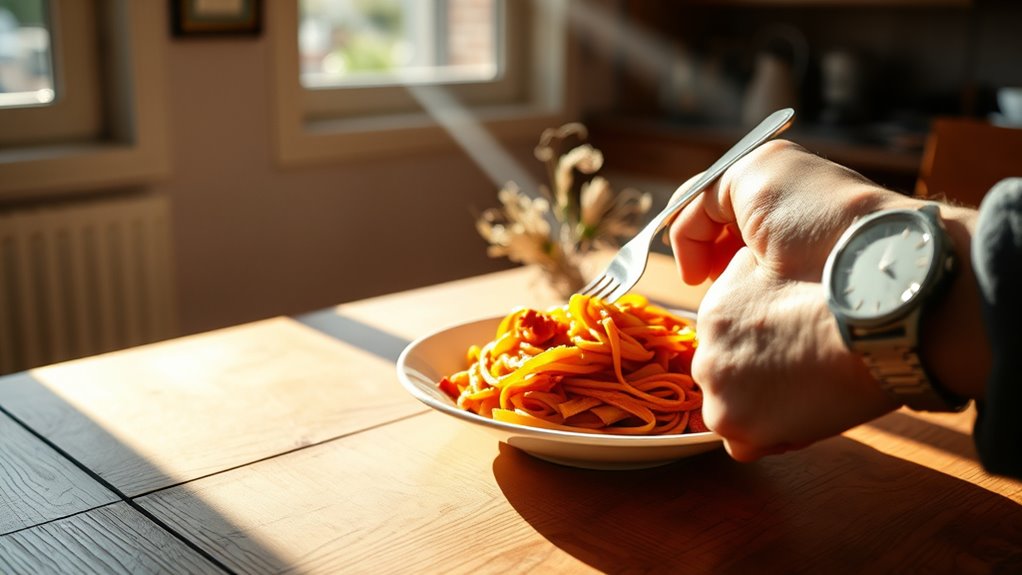
Slowing down meals isn’t just a vague tip—it’s a measurable change that can affect how full you feel and how much you eat. In this piece, you’ll examine how training yourself to eat slower translates to observable outcomes, supported by evidence and clear reasoning. You’ll see that the act of decelerating meals isn’t a guess but a deliberate behavior change with trackable effects on intake, satisfaction, and body cues. When you pace your eating, you give your stomach time to register fullness, which reduces the likelihood of overshooting portions. This isn’t about restriction; it’s about aligning eating pace with physiological signals, a relationship documented in multiple controlled studies and meta-analyses. You’ll encounter data showing that slower eating correlates with lower total energy intake in a single meal and across the day, especially when combined with mindful attention to taste and texture.
Slowing meals measurably aligns intake with fullness cues and mindful eating.
You’ll notice how mindful chewing becomes a practical mechanism for this shift. By taking smaller bites, chewing thoroughly, and pausing between bites, you create opportunities to evaluate hunger and fullness before continuing. Mindful chewing makes sensory cues more salient, which helps you discern satiety signals more accurately. In turn, this reduces impulsive second-helpings and supports steadier energy intake. The measurable result is a tighter alignment between what you eat and what your body needs, rather than what’s convenient or habitual. When you emphasize mindful chewing, you’re not merely slowing down; you’re introducing a qualitative change in how you process food, which can improve post-meal comfort and reduce episodes of overeating.
Portion control emerges as a natural companion to slower eating. If you begin with an initial, reasonable portion and then allow time for fullness signals to appear, you typically avoid the common trap of sequentially “refilling” plates. Training yourself to pause after each course of bites creates an evidence-based feedback loop: you compare ongoing appetite with recorded fullness, not hypothetical desire. Over several weeks, this loop strengthens. You’ll find that small, deliberate plates paired with extended chewing periods yield consistent reductions in total intake without increasing hunger between meals. That stability is an empirical outcome, not mere perception.
From a practical standpoint, you can implement this by setting a target eating pace, using a timer, and ensuring each bite lasts a certain duration. Track meals for a few weeks to quantify changes in portion sizes and reported fullness. Review patterns: do you feel satisfied with less food? Is the interval between bites longer? Do you experience fewer post-meal energy dips? If so, you’ve demonstrated a measurable, repeatable effect. In sum, training yourself to eat slower yields concrete benefits: improved fullness accuracy through mindful chewing and better portion control, leading to more consistent energy balance and a healthier relationship with meals.
Common Questions
How Long Does It Take to Notice Changes From Slower Eating?
Slow eating tends to show noticeable changes within 2 to 4 weeks. You’ll likely feel fuller sooner, and portions may shrink as you savor each bite. Think of your pace like a metronome—steady, deliberate. You’ll also notice steadier energy and fewer post-meal slumps. Track grocery budgeting and mindful snacking to reinforce the pattern: smaller, planned meals save money and curb cravings. If you’re consistent, improvements compound week by week.
Can Eating Slower Help With Weight Loss Goals?
Yes, slow eating can support weight loss goals. When you slow down, you’re more likely to notice fullness cues, eat less total energy, and boost satiety signals. Practicing mindful meals reduces overeating and improves portion control. Consistent slow eating pairs well with balanced meals and regular activity. You’ll likely experience steadier appetite and fewer cravings over time. For best results, aim for 20–30 minutes per meal and focus on the sensory aspects of your food.
Does Slower Eating Affect Digestion or Bloating?
Slower eating can help digestion and reduce bloating. You’ll likely experience slower eating digestion, meaning meals are broken down more gradually, easing stomach workload. This can lead to bloating relief as gas buildup diminishes and you swallow less air. Evidence suggests paced meals improve satiety signals and may prevent overeating, which indirectly aids digestion. You’ll notice steadier energy after meals and fewer uncomfortable bloating episodes, especially with mindful chewing and regular meal timing.
What Are Practical Tips to Pace Each Bite?
To pace each bite, practical pacing matters: chew thoroughly, aim for about 15–20 chews per bite, and set a tempo that slows you down without feeling performative. Use mindful bites by pausing between bites, sipping water, and counting chews. Rely on evidence-based cues like noticing fullness signals. Track progress with a simple timer or app. You’ll cultivate mindful bites and a steadier pace, improving digestion comfort and reducing overeating tendencies.
Is Slower Eating Effective for Kids or Teens?
Slower eating can help you as a kid or teen, but there’s nuance. You’ll likely see modest benefits in appetite control and digestion, though evidence is stronger for adults. Slower eating impact varies by individual, and kid teens applicability depends on supervision and consistency. You’ll want age-appropriate strategies and realistic goals. While you might enjoy better fullness cues, don’t expect dramatic shifts overnight. Stay grounded in practical steps and monitor responses.