
You mix probiotic yogurt with fiber-rich boosters, you balance soluble and insoluble sources, you rotate ingredients to keep taste and gut support consistent. You’ll find oats or chia for fiber, berries or apples for polyphenols, greens for micronutrients, and a hydrating base to keep things smooth. You’ll notice how this approach supports steady digestion and daily variety, and the reasons behind each choice may surprise you as you tweak your own blend.
Key Points
- Choose probiotic-rich add-ins like yogurt, kefir, or fortified plant yogurts to boost live cultures in smoothies.
- Pair probiotics with a fiber balance using chia, oats, or flaxseeds for soluble fiber and gut nourishment.
- Include prebiotic fibers (unripe banana, oats, chia) to feed beneficial microbes without overloading flavor.
- Add fruits with skins or seeds (berries, apples) for insoluble fiber and texture; start small to prevent bloating.
- Keep consistency by making smoothies a near-daily habit with meals, and hydrate with water or a low-sugar beverage.
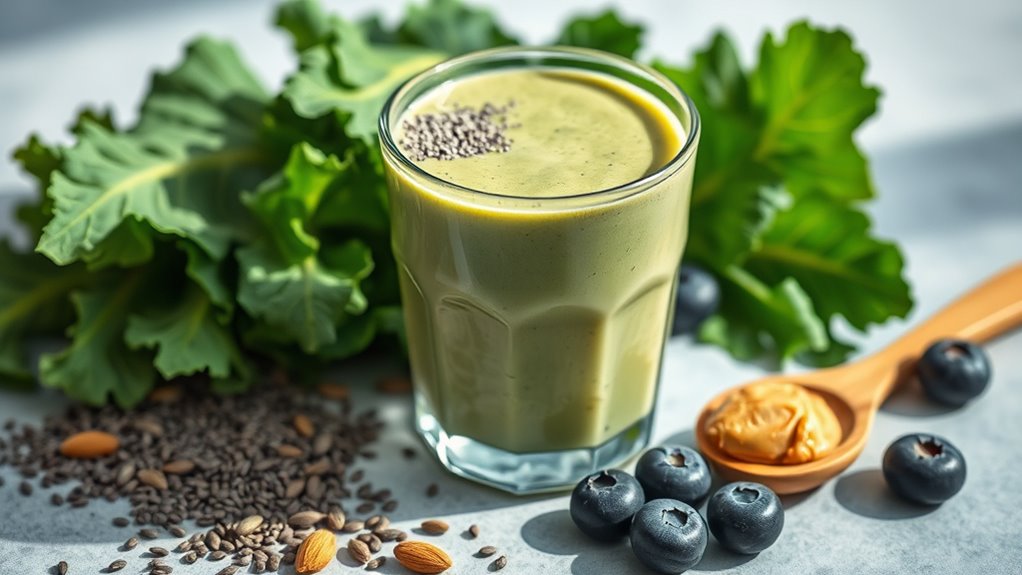
Smoothies are a quick, tasty way to boost gut health, but not all add-ins are created equal. In my go-to blends, I prioritize ingredients that evidence supports for supporting digestion, microbiome balance, and regularity, while keeping flavors appealing and texture smooth. You’ll notice that small changes can shift how your gut feels without wrecking taste.
First, when you consider probiotic timing, you’re aiming for live cultures to reach the gut with enough viability. I favor add-ins that bring potent strains without relying on a single product to do all the work. A scoop of yogurt or kefir can introduce Lactobacillus and Bifidobacterium, but you’ll often get better stability by pairing fermented dairy with a fruit-based smoothie consumed soon after blending. If you’re dairy-free, look for fortified plant-based yogurts with credible live-culture claims and serving sizes that align with your other meals. The key is consistency: daily, or near daily, intake around meals helps numbers become steadier over weeks rather than chasing a one-off boost.
A daily probiotic boost: pair yogurt or kefir with a fruit smoothie for steady gut support.
Second, fiber balance matters more than you might think. A good smoothie should supply both soluble and insoluble fibers in a balanced ratio to slow digestion, feed your gut microbes, and aid stool formation. I lean toward fruits with skins or seeds when you tolerate them, like berries, apples, or mango with a thin peel. Add a handful of finely chopped greens, oats, chia, or flaxseed to boost soluble fiber and create a creamy texture. If you’re adding high-fiber toppings, start small and increase gradually to reduce bloating. Hydration matters too; fiber needs water to move efficiently through your gut, so pair your smoothie with water or a low-sugar beverage.
Third, think about prebiotics as the structural backbone of your gut-friendly blend. Prebiotic fibers from onions, garlic, leeks, asparagus, or resistant starches in cooled potatoes or rice can nourish the probiotics you’re introducing. In smoothie form, you’ll often rely on slippery chia, oats, or unripe bananas to supply prebiotic fibers without overpowering the flavor. You don’t need all of them every day; alternate focus across the week keeps your gut guessing in a helpful way.
Finally, flavor and practicality keep you coming back. I steer toward ingredients you already keep on hand, minimize chopping time, and prefer items with proven mouthfeel advantages—yogurt provides body, oats offer creaminess, and seeds deliver a pleasant crunch when you’re craving texture. With consistent probiotic timing and thoughtful fiber balance, your smoothies can become a reliable habit that supports a resilient gut without demanding major changes to your routine.
Common Questions
Do Smoothie Add-Ins Affect Sugar Content Significantly?
“Gas that grows on a grill” adage? Not quite, but here goes: Yes, smoothie add-ins can raise sugar content, depending on portions and whole-food choices. You’ll want to track two word discussion idea one and two word discussion idea two as you balance flavor with fiber. In practical terms, opt for low-sugar fruits, protein, and fiber-rich add-ins, measure servings, and monitor total daily sugar to keep it evidence-based and approachable.
Can I Use These Add-Ins in Hot Beverages Too?
Yes, you can use these add-ins in hot beverages too, but note flavor notes may change and some blends don’t melt as smoothly. Do smoothie add-ins affect sugar content substantially? Yes, some add-ins add sugars or carbs, so track portions and choose unsweetened options when possible. For practicality, add small amounts to hot drinks, whisk well, and monitor taste. Evidence supports mindful portioning to maintain balance without spiking sugar.
Are There Any Allergy-Safe Substitutes for Common Add-Ins?
Like a safety net catching you mid-splash, yes—there are allergy-safe substitutes for common add-ins. You can use flaxseed or chia for fiber, oats for texture, coconut yogurt for creaminess, and almond or oat milks if dairy’s off-limits. For flavor-compatible swaps, switch to sunflower butter or pumpkin seeds instead of peanut, and vanilla extract or cocoa powder to maintain taste without allergens. These choices align with evidence-based, practical, flavor-compatible swaps.
How Long Can Blended Smoothies With Add-Ins Be Stored?
You can store blended smoothies with add-ins for up to 24 hours in the fridge, but quality depends on ingredients. For best flavor preservation, keep them tightly sealed, refrigerate promptly, and shake before drinking. If you’re freezing, use airtight containers and thaw overnight in the fridge, not at room temperature. Note that storage duration varies with fiber-rich add-ins; dairy or fruit-heavy blends may degrade faster, so taste and check texture before consuming.
Do Add-Ins Impact Probiotic Viability in Smoothies?
Add-ins can affect probiotic viability and sugar impact in smoothies. Yes, some probiotics may lose potency if exposed to heat, oxygen, or acidic environments, so timing matters. You’ll maximize viability by chilling ingredients, blending briefly, and consuming soon after prep. Look for shelf-stable strains or add-ins kept refrigerated. Avoid extra sugar that fuels spoilage. In practice, you’ll notice fresher flavor and steadier gut-boosting effects when you prioritize low sugar and proper storage.