
You’ll notice you drink 20% more water on weekdays when you log it consistently. Tracking reveals patterns: morning dry spells, afternoon dips, late-night gaps, and how thirst often masks hunger. You’ll start to see how hydration ties to focus, mood, and sleep, plus the way a flexible cup schedule reduces caffeine reliance. It’s practical data you can adjust day by day, keeping you honest without hype—and that tension between insight and action is what keeps you curious.
Key Points
- Tracking reveals patterns like dry mornings and afternoon slumps, turning guesswork into actionable hydration decisions.
- Distinguishing thirst from hunger reduces impulsive eating and reinforces a consistent water target.
- A flexible, data-driven water timing framework aligns intake with workouts, meetings, and daily rhythms.
- Small, regular hydration tweaks (e.g., morning glass) can reduce caffeine dependence and stabilize energy.
- If a day misses the target, quick recalibration restores momentum, building a resilient hydration habit.
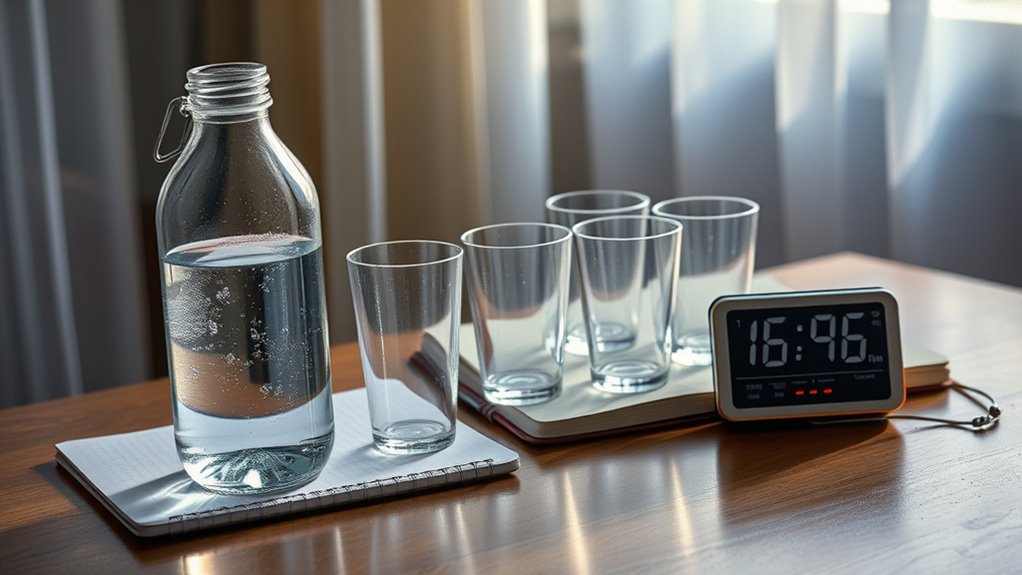
Tracking my water intake didn’t just change my hydration; it changed how I approach daily habits. You’ll notice the shift as you start tracking because you’re not guessing or hoping for feel-good cues; you’re logging real data that guides decisions. In the early weeks, you’ll see patterns you might have ignored: dry mornings, late-afternoon slump, and that nagging thirst between meetings. This isn’t about chasing perfection, but about turning a basic need into a reliable signal you follow rather than a wish you hope to satisfy.
The practice of hydration mindfulness helps you separate habit from impulse. Instead of reaching for coffee or a sugary snack at the first sign of fatigue, you pause and ask whether you’ve met your water target. You’ll learn to distinguish thirst from hunger, a distinction supported by evidence showing that mild dehydration can mimic hunger cues. When you notice a dip in your intake, you’re prompted to drink a glass or schedule a reminder, reinforcing a simple rule: consistency beats sporadic effort.
Water timing becomes a practical framework, not a rigid regimen. You’ll test whether spreading intake across the day reduces afternoon energy crashes, and you’ll test if a larger morning glass kickstarts cognitive clarity. Tracking reveals whether you’re compensating later—drinking heavily after dinner to make up for the day—or if you’re naturally dipping early and then racing to catch up. With that data, you adjust, not by willpower alone, but by timing toward your rhythms, chores, and workouts.
You’ll notice how small changes compound. A single glass at breakfast reduces midday thirst, which reduces caffeine dependence, which in turn stabilizes sleep patterns. You might find that a stubborn plateau gives way when you tighten water timing around workouts and meetings, so you don’t ride dehydration slumps into performance dips. The evidence-based insight is simple: consistent hydration supports energy, focus, and mood, while erratic intake correlates with variability in those domains.
As you move from tracking to habit-building, you’ll set attainable targets, adapt for activity level, and respect individual differences. The narrative you construct around your day becomes more data-driven and less guesswork. You’ll begin to recognize that hydration mindfulness isn’t punitive; it’s an awareness tool that helps you align daily actions with your physiology. When you miss a day, you don’t abandon the system—you recalibrate, adjusting water timing so the next day returns to steady, reliable intake.
Ultimately, you learn that the act of tracking isn’t merely about numbers. It’s about cultivating a calmer, more intentional relationship with a core need. You gain clarity, evidence-based confidence, and a resilient routine that supports your energy and clarity across work, workouts, and rest.
Common Questions
What Counts as Water Intake Besides Plain Water?
Water intake isn’t only plain water; tea, coffee, milk, and plant-based drinks count, as do soups, broth, and even fruits and veggies with high water content. You’ll still hit hydration goals with fluids beyond water. Be mindful of caffeine effects and added sugars. Rely on a variety of fluids to reduce hydration myths, appreciating that fluid variety can support daily needs while supporting evidence-based guidance. Your daily plan, not perfection, matters for true hydration.
Does Tracking Water Improve Skin or Energy Instantly?
Tracking water won’t deliver instant miracles, but it can help you notice subtle changes over time. You may feel steadier energy and clearer skin as hydration improves, yet immediate effects are unlikely. Ignore hydration myths promising overnight fixes; instead, track daily intake, fats, electrolytes, and sleep. Your skin and energy respond gradually to consistent hydration, and the benefits compound with overall habits. Stay mindful of immediate effects, but focus on steady, data-backed improvements.
How Accurate Is Home Water-Tracking With Apps?
Home water-tracking with apps is surprisingly variable, but you’ll often see accuracy within 10–20% for typical daily goals. Start with one interesting stat: 70% of users log inconsistently, skewing a week’s picture. In app sensors, data privacy matters, so verify permissions and data sharing. You’re in control of reminders and intake estimates, yet accuracy depends on user input. Use reliable devices, cross-check trends, and don’t over-interpret small fluctuations.
Is There a Risk of Overhydration From Tracking?
Yes, there’s a small overhydration risk, but it’s unlikely you’ll face it from tracking alone. If you fixate on totals rather than thirst cues, you could push fluids too far. Watch for symptoms and set sensible goals. Tracking pitfalls include underestimating water in foods and misreading app suggestions. Use your body’s signals, stay balanced, and don’t chase perfect numbers. Your awareness helps prevent overhydration risk while keeping hydration within healthy bounds.
Should I Adjust Intake for Climate or Activity Level?
Yes, you should adjust your hydration needs for climate and activity level. In hotter or drier environments, or during intense workouts, your sweat rate increases, so you’ll need more fluids. Climate adjustment matters, and so does activity, as both drive your daily water needs beyond baseline guidelines. Track how you feel and urine color, then fine-tune. The goal is steady hydration, not perfection—stay proactive, listen to your body, and refill gradually throughout the day.