
You’ll reach for a small, balanced bridge snack when late-night hunger hits. Think Greek yogurt with berries, a pinch of cinnamon, and a handful of almonds, portioned to about 180 calories. It supplies protein, fiber, and healthy fats without heavy carbs. Sip water and wait a few minutes to assess true hunger cues. It’s a calm, evidence-based approach that could change how you sleep tonight—and that decision might surprise you.
Key Points
- A bridge snack with protein and fiber (e.g., Greek yogurt with berries) helps satiety without heavy digestion late at night.
- Pair protein/fiber with a small portion of carbs to curb cravings while avoiding stomach overwhelm.
- Avoid bland or indulgent extremes; choose tangy yogurt or lightly salted nuts for satisfying flavor with fewer calories.
- Pre-portion snacks to 150–200 calories to stabilize daily intake and support better sleep.
- Hydration and timing matter: drink water first, then assess hunger after a few minutes before choosing a low-calorie option.
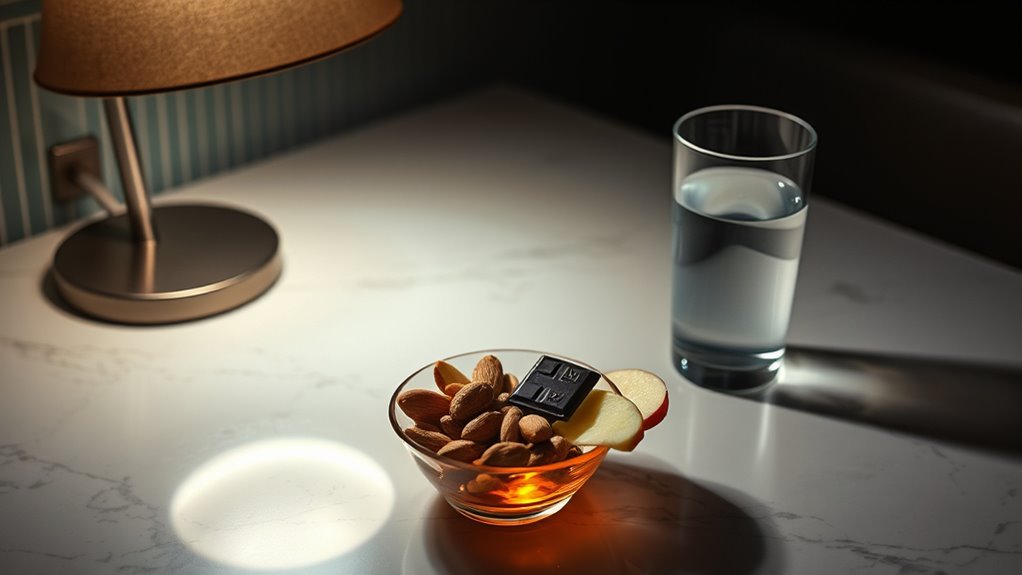
Ever find yourself awake at 2 a.m. haunted by gnawing hunger that seems to derail your sleep? You’re not alone, and you’re not powerless. The snack you choose matters as much as the act of choosing itself. In my experience, a simple, evidence-based switch helped curb late-night cravings without sabotaging sleep or next-day energy. It wasn’t magic; it was a combination of timing, nutrient balance, and mindful portion control.
First, I learned to prioritize snacks with a modest amount of protein and fiber, paired with a small portion of carbohydrates. Protein helps you feel fuller longer, while fiber slows digestion without triggering a sugar spike. A practical example: a small bowl of Greek yogurt with berries, or a handful of almonds with a piece of fruit. These options consistently reduced the feeling that I needed to eat more to quiet the night. The key is not to overwhelm your stomach or your metabolism. A modest, balanced bite is enough to bridge your hunger without waking you up later with a heavy, uncomfortable stomach.
A balanced, modest bite silences night hunger without waking you.
You’ll also want to consider the taste profile. If a snack tastes bland or indulgent, it can trigger cravings for more. Aim for a satisfying flavor that doesn’t encourage mindless munching. A tangy yogurt, a lightly salted nut, or a bit of cinnamon on fruit can deliver a rewarding flavor without extra calories or sugar. When your taste profile aligns with a sensible portion, you’re less likely to overeat and more likely to sleep through the night.
Portion control is where the science meets practicality. A practical approach is pre-portioning snacks so you’re not tempted to double-dip into a larger container. Set a clear limit, such as 150 to 200 calories, depending on your daily target and next-day schedule. This boundary reduces the chance of waking up hungry again with intensified cravings. It also helps you maintain a stable overall daily intake, which supports better sleep quality and daytime alertness.
Hydration plays a quiet but essential role. A glass of water or a warm, caffeine-free beverage can help distinguish actual hunger from thirst or a reflex to snack. If after a few minutes you still feel hungry, choose your low-calorie, nutrient-dense option rather than an empty-calorie snack. This approach preserves energy balance and supports consistent sleep.
Over time, you’ll notice fewer nighttime awakenings and more restful sleep. The strategy isn’t about deprivation; it’s about aligning your snack with your body’s needs and your goals. By focusing on a balanced taste profile, mindful portion control, and smart timing, you can transform late-night hunger from a disruption into a controllable, restorative moment.
Common Questions
How Soon Did You Notice Appetite Changes After Snacking?
Your appetite dips quickly, like a clock striking noon after a steady drizzle. You notice changes within 15 to 30 minutes of snacking. The early impact depends on your snack criteria: protein and fiber help curb hunger longer, while high-sugar options spike and crash. You’ll feel less craving-driven by evening if you choose balanced options. Track portions, timing, and satisfaction to confirm patterns and refine your snack criteria for consistent results.
Were the Snacks Expensive or Affordable Long-Term?
Yes, snacks can be affordable long term, not just expensive. You’ll likely find budget options that curb cravings without breaking the bank, making the choice sustainable. Compare cost per serving and nutritional value, not just sticker price. Expensive vs. affordable long term often hinges on frequency, portion control, and quality. You’ll benefit from planning ahead, choosing fiber- or protein-rich snacks, and avoiding ultra-processed items that spike hunger and costs over time.
Did You Experience Any Sleep Disruption From Late-Night Eating?
Sleep disruption is possible with late-night eating, but it depends on timing and what you snack on. If you eat close to bedtime, you may wake more easily or have lighter sleep; choose easily digestible snacks and allow a buffer of 1–2 hours before bed. Snack timing matters: earlier evening bites tend to disrupt sleep less. Monitor your own patterns and adjust portions to minimize wake-ups and maintain steady sleep quality.
Which Ingredients Mattered Most for Fullness?
You’ll find fullness is driven most by calorie density and fiber content. Foods with low calorie density let you eat more volume while still cutting total calories, and higher fiber slows digestion, promoting satiety. So, prioritize vegetables, legumes, whole grains, and fruits with skins. Pair them with a modest protein source to sustain fullness further. In short, choose high-fiber, low-calorie-density options to curb late-night hunger effectively.
Did You Try Other Snacks Before Settling on This Choice?
Yes, you did try other snacks first. You sampled different options, comparing portions, calories, and satiety signals before settling. Evidence guided you: higher-protein or higher-fiber choices tended to curb late-night hunger more effectively than carbs alone. You tracked fullness, appetite timing, and sleep impact, then favored a snack that balanced protein, fiber, and moderate calories. Ultimately, you chose what reliably reduced urges without triggering overconsumption, proving systematic testing pays off.