
You’ll notice real staying power when your breakfast pairs a protein source with fiber-rich carbs and a bit of produce or healthy fat. Think eggs with whole-grain toast and fruit, or Greek yogurt with berries and oats, plus a smoothie with plant-based protein. This one-third, one-third, one-third balance helps curb hunger hormones and steady energy. Try rotating options to avoid boredom and keep fullness reliable, then see what keeps you steady through mid-morning.Your routine might just quietly change the pace of your day.
Key Points
- A breakfast with a protein source plus fiber-rich foods slows digestion and sustains blood sugar, reducing mid-morning cravings.
- Protein options include eggs, Greek yogurt, or a protein smoothie, supporting fullness and steadier appetite.
- Fiber sources like fruits, vegetables, or whole grains extend fullness by delaying gastric emptying and signaling satiety.
- Ideal plate: one-third protein, one-third fiber-rich carbs, one-third produce or healthy fats to balance portions.
- Rotating protein and fiber sources, and tracking how you feel hours after breakfast, reduces hunger hormones and cravings.
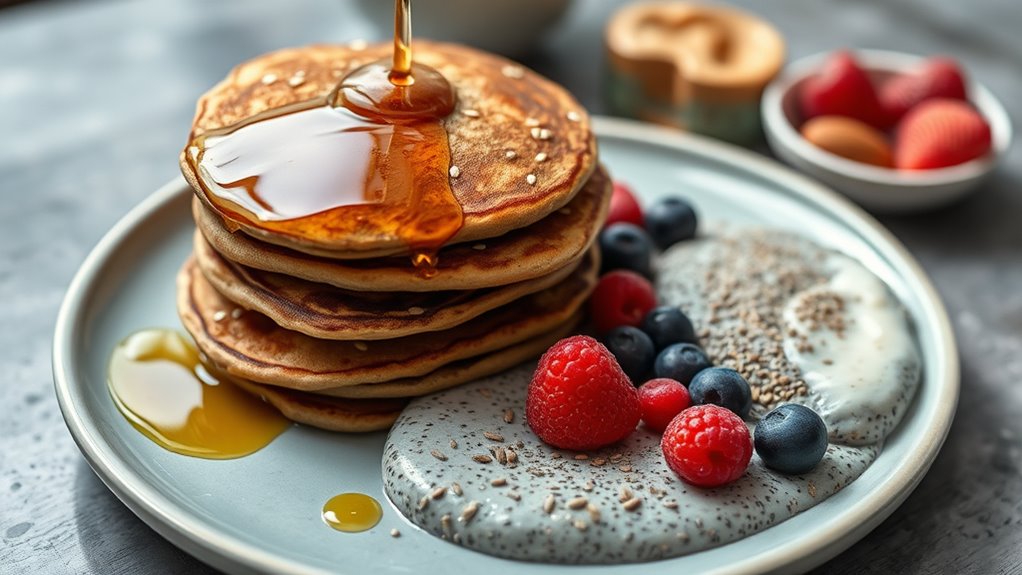
If you’ve ever reached for a mid-morning snack and felt instantly hungry again, you’re not alone. You’re likely chasing steady energy, and the trick isn’t more caffeine or sugar, it’s smarter breakfast choices. I tried a combo that changed how long I stayed full, and the science behind it lines up with what you’ll experience: fewer mid-morning cravings, steadier focus, and less post-meal dip. The core idea is simple: pair components that work together to slow digestion and sustain blood sugar.
First, you select a protein source that tastes good and hydrates your muscles without weighing you down. Think eggs, Greek yogurt, or a scoop of plant-based protein in a smoothie. Protein helps regulate appetite by signaling fullness and stabilizing insulin responses. Then you add a portion of healthy fibers from fruits, vegetables, or whole grains. These fibers slow stomach emptying and promote gut signals that tell your brain you’re satisfied. The combined effect makes your breakfast feel more substantial than its calorie count suggests.
Pair a tasty protein with fiber-rich foods to make breakfast feel substantial beyond its calories.
Next comes the fiber-protein balance you’re after. If you focus on that balance, you’ll notice you don’t need extra portions to feel full. For instance, pairing oats with a scoop of yogurt delivers both protein and fiber in one bowl. Or you might mix chia seeds into a smoothie with berries and a spoon of nut butter. The variety matters because different foods deliver complementary amino acids and fermentable fibers that extend fullness. You’re not chasing a single nutrient; you’re optimizing the combo.
Flavor matters, too. You’ll stay with the routine longer if meals taste good and feel satisfying, not like a medical protocol. Control portions by starting with a standard plate: about a third protein, a third fiber-rich carbs, and a third produce or healthy fats. This structure helps you keep calories in check while still delivering the protein balance you need. It’s not about restriction; it’s about predictable portions and reliable signals to your brain that you’re nourished.
Evidence supports what you’re doing, not just what you hope. Studies show that meals with a deliberate protein-to-carbohydrate ratio and substantial fiber reduce hunger hormones after breakfast and blunt subsequent cravings. You’ll likely notice you reach for snacks less often, and when you do snack, you pick more satisfying options. Your energy stays steadier, which reduces the urge to reach for caffeine cycles or sugary treats.
If you’re aiming for a lasting effect, rotate proteins and fiber sources to avoid plateaus in fullness and taste fatigue. Track how you feel hours after breakfast, not just at the moment of eating. Over time, you’ll confirm that this breakfast combo supports lasting fullness through steady appetite signals, not short-lived satisfaction.
Common Questions
How Long Does Fullness From This Combo Typically Last?
How long fullness lasts varies, but typically you’ll feel full for about 3 to 5 hours after this combo. Factors affecting duration include portion size, protein and fiber content, hydration, meal timing, and your activity level. If you’re very active or have a high metabolism, fullness may fade sooner; on slower days it can last longer. To maximize duration, pair balanced protein, fiber, and healthy fats, and sip water between bites.
Can I Customize Components for Dietary Restrictions?
“Where there’s a will, there’s a way.” You can customize components for dietary restrictions, sure. You’ll adapt flavors, textures, and macro balance to fit your needs. Start with protein, fiber, and healthy fats, then swap ingredients to meet allergies or preferences. For evidence-based guidance, explore topic ideas like portion control and nutrient density, and lean into dietary customization to sustain fullness without compromising goals. Always check labels and consult a clinician if you have medical concerns.
Is This Breakfast Suitable for Weight Loss Goals?
This breakfast can support weight loss goals if it fits your total daily calories and macro targets. Is this breakfast balanced with protein, fiber, and liquids, and does it avoid excessive sugar? Pair it with mindful portions and regular activity to enhance results. Remember, sustained weight loss comes from long-term habits, not a single meal. If your portions align with your goals, this breakfast can be a helpful component of your plan toward weight loss goals.
Are There Any Potential Side Effects or Drawbacks?
Potential side effects exist, though they’re typically mild. You might notice digestive changes, jitters if caffeinated, or temporary bloating as your body adjusts. Flavor tradeoffs can emerge, too, if you prioritize nutrients over taste or vice versa. To minimize drawbacks, start with small portions, monitor how you feel, and choose fiber and protein-rich options. If symptoms persist, consult a clinician. You’ll balance safety and satisfaction by tracking outcomes and refining the routine.
How Should I Time This With Workouts or Meals?
You’ll want to time it around your workouts so you don’t feel sluggish or nauseated. For workouts in the morning, have the breakfast combo 60–90 minutes before training, then a small post-work snack if needed. For afternoon/evening sessions, eat a balanced meal 2–3 hours prior, and refuel with a lighter option within 30–60 minutes after. Syncing meals with training supports energy and recovery, and helps you stay consistent.